Takaki216
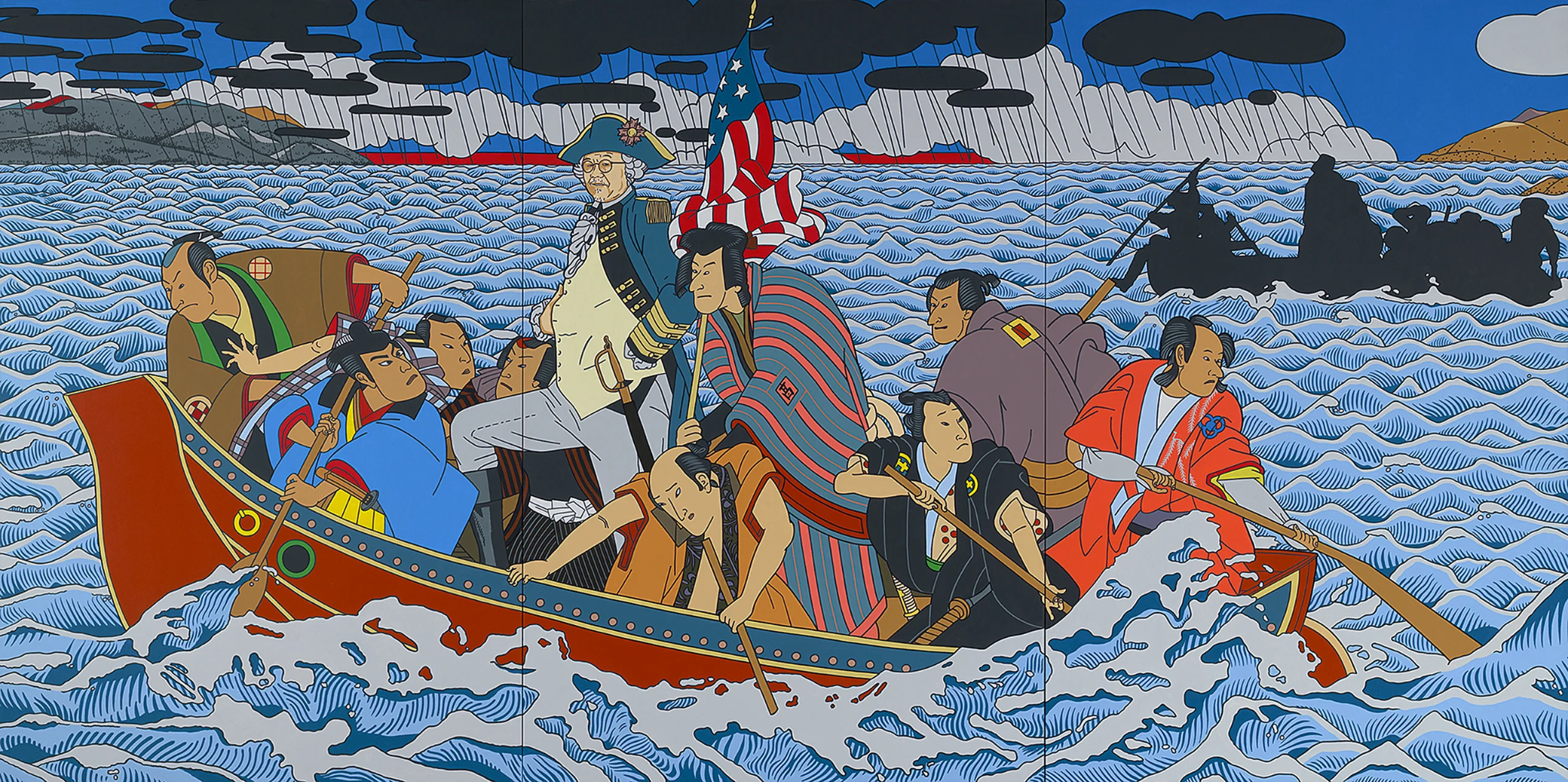
Detail of Roger Shimomura’s Shimomura Crossing the Delaware.
Roger Shimomura, Shimomura Crossing the Delaware

Key idea 03 · Across the whole book

Ideas are weapons

How can a story make unequal power seem right—or help people challenge it?

Gist

A story or belief can help people get others to accept unfair treatment—or work together to change it.

Check your understanding
Check your understanding: A player calls a teammate “useless” to persuade others to exclude them. What is the idea doing?

Academic definition

Ideas influence struggles over power by legitimizing domination, defining belonging, or mobilizing resistance. To explain the connection, identify the idea, who uses it, and the action it helps justify or organize.

Check your understanding
Check your understanding: Which answer explains an idea’s role in power?

Elaboration

Ideas are weapons when people use language, beliefs, or stories to defend power or challenge it. Calling a policy protective can hide who loses freedom. Describing a group as foreign can make exclusion seem reasonable. The key question is what an idea helps someone justify, demand, or do.

Ideas also shape which futures people can imagine. Jefferson called slavery immoral while remaining an enslaver, yet pictured removing freed Black people instead of sharing equal citizenship. By contrast, Clara Lemlich connected political reading to organizing for change, while Mexican strikers made equality a reason to support one another. Beliefs could close possibilities or open them.

Words gain force through people and institutions: newspapers circulate arguments, unions turn shared demands into strikes, and governments turn classifications into rules. Takaki applies the same insight to history itself. A national story that includes previously excluded people can challenge assumptions about who belongs, but learning that story does not automatically produce equality.

YPT 6–7 YPT 19 YPT 60–61 YPT 70 YPT 140–141 YPT 152–154 YPT 198–199 YPT 235–236 YPT 243 YPT 294 YPT 296 YPT 339
Check your understanding
Check your understanding: Can an idea be a “weapon” for people challenging unfair treatment?

Follow an idea into action

  1. 01

    Name the claim

    Identify the story, label, promise, or belief being offered.

  2. 02

    Locate its purpose

    Ask whose authority it supports, whose experience it challenges, and what response it seeks.

  3. 03

    Trace its carriers

    Find the speakers, newspapers, schools, organizations, or laws that spread or enforce it.

  4. 04

    Test the effects

    Compare the actions and results with the promise, including resistance and limits.

Compare across chapters

Follow the connections

01

Who gets to define progress?

Claims about helping people can justify taking control of their lives. Across colonization and Native removal, officials described their own preferred future as divinely approved, protective, or civilizing. Comparing that language with Native testimony reveals whose choices disappeared when outsiders gained the authority to define improvement.

Chapter 2

New England colonizers treated epidemic deaths as evidence that God had given them Native land. Religious leaders later described war as a battle against evil, turning settlement and conquest into supposedly righteous actions.

YPT 35–37
Chapter 4

Jackson presented removal as a protective move to a place where Native peoples could govern themselves. Choctaw leader George Harkins instead described departure as a choice between imposed evils, exposing how little freedom that promise allowed.

YPT 70 YPT 74
Chapter 9

Dawes promoted individual land ownership as a route to independence and civilization. The law allowed allotment without tribal consent and the sale of remaining land to white settlers, connecting a reform argument to dispossession.

YPT 173–174

These arguments differ: religious destiny, paternal protection, and private property offered different explanations for control. Their shared move was to make outsiders’ authority seem rightful. Test each explanation against who decided, who gained land, and whether Native communities could meaningfully refuse.

02

Blame can divide; solidarity can unite

When workers face insecurity, public arguments can identify other workers as enemies or as allies. Neither outcome follows automatically from sharing hardship. Politicians, employers, and workers compete to explain the problem, and those explanations can affect whether people attack neighbors or organize together.

Chapter 6

Before the New York riots of 1863, Democratic politicians warned that emancipation would threaten Irish workers’ jobs. Their message directed anxiety toward Black people, helping inflame hostility toward another group with limited power.

YPT 113
Chapter 7

Mexican members of the Japanese Mexican Labor Association rejected an AFL charter that excluded their Japanese coworkers. They connected fair wages to rejecting racial prejudice, making equal respect a condition of accepting the AFL’s charter.

YPT 140–141
Chapter 10

Japanese and Filipino plantation workers sought cooperation across nationalities. Planters answered with claims of a Japanese government plot, while also using strikebreakers and evictions; their message worked alongside direct pressure on workers and families.

YPT 198–199

The Irish case shows fear encouraging racial hostility; the California and Hawaii cases show workers choosing solidarity despite divisions. Yet a convincing shared ideal did not guarantee victory: the JMLA later disappeared, and Hawaiian planters combined propaganda with control of jobs and housing.

03

Use a promise as a standard

People denied rights can turn a powerful person’s stated values into a test of that person’s conduct. Instead of accepting comforting language, they point to a contradiction between the promise and the treatment. This can make familiar ideals support demands that authorities would rather avoid.

Chapter 5

J. W. Loguen’s former enslaver claimed he had been raised like her own children while demanding payment for him. His reply asked whether she raised her children for sale, exposing the contradiction in her family language.

YPT 101–103
Chapter 14

James G. Thompson’s 1942 letter supported victory in World War II while demanding victory over prejudice at home. Black newspapers, clubs, and pins spread this Double V argument, making democratic language a public claim to equality.

YPT 293–294 YPT 296
Chapter 15

Randolph challenged military segregation by asking why Black Americans should defend democracy abroad while being denied it at home. The possibility of a large protest march added pressure before Truman ordered equal treatment in the armed services.

YPT 297–298

Loguen tested a personal claim of family care; Thompson and Randolph tested national claims of democracy. Each exposed a gap between words and treatment. Loguen also practiced abolitionism; Thompson’s demand spread through newspapers, and Randolph backed his demand with the possibility of organized protest.

04

Stories make belonging visible

National belonging is also contested through accounts of ordinary lives. A person treated as an outsider can tell a story that challenges the assumed boundary of American identity. Comparing historical writing, cultural expression, and personal testimony shows different ways to make excluded experiences publicly visible.

Chapter 1

Takaki interprets being mistaken for a foreigner through the Master Narrative, a history centered on white Europeans. He presents minority testimony as evidence that can reveal people and experiences this narrow account leaves out.

YPT 6–7 YPT 19
Chapter 13

Harlem writers and artists drew inspiration from Black lives, history, and culture. Langston Hughes explored an identity that was both African and American, challenging the assumption that a person must choose only one source of belonging.

YPT 265–266
Chapter 16

Fatema Nourzaie described herself as equally Afghan and American. In a different legal situation, undocumented students and journalist Jose Antonio Vargas made personal experiences public in 2011 to press for changes to immigration rules.

YPT 327–328 YPT 334–336

These stories contest invisibility, but the barriers differ: Takaki and Nourzaie face doubts about belonging despite US birth, while undocumented activists seek legal changes. Takaki’s closing appeal for inclusive history asks readers to recognize shared membership without erasing such differences in experience or status.

Find it in every chapter

17 chapter connections

Open a chapter for its explanation, supporting evidence, and original page links.

01Why a Different Mirror?

Historical stories can make some people seem central and others invisible. Takaki argues that the Master Narrative narrows national belonging, while testimony and comparative history can challenge that boundary. In this interpretation, studying history changes which people readers recognize as participants in the nation’s past and present.

  • Takaki describes a popular historical story that sidelines people who are not of European ancestry.

    YPT 6–7
  • Personal accounts preserve suffering, humanity, and family memory; the different-mirror image calls for a history that reflects everyone.

    YPT 18–19

How can adding a person’s testimony change the meaning of a familiar national story?

Open Chapter 1 study guide ↗
02Removing the “Savages”

Descriptions of Native peoples helped make conquest appear justified. Colonizers presented disease as a divine gift of land and war as a battle against evil. Captivity narratives also contained evidence of Native kindness that could challenge the same stereotypes.

  • Settlers interpreted Native deaths as God making room for them. Religious leaders later cast war against Native peoples as a conflict between God and the Devil.

    YPT 35–37
  • Mary Rowlandson and Mary Jemison described kindness and generosity that complicated English stereotypes of Native peoples.

    YPT 37–38 YPT 43–45

Choose one colonial claim. How did it turn an interest in land into an argument that conquest was right?

Open Chapter 2 study guide ↗
03The Hidden Origins of Slavery

Claims about social rank and racial difference helped justify who should hold power. Colonial elites treated rebels as inferior people challenging their betters; Jefferson later combined criticism of slavery with a belief that Black and white people could not live together. Such ideas narrowed which reforms their speakers considered acceptable.

  • Colonial leaders interpreted the armed rebels at Jamestown as a threatening mob beneath them in the social order.

    YPT 57
  • Jefferson’s belief in Black inferiority shaped his proposal to remove freed Black people instead of imagining equal membership.

    YPT 60–61

How can an idea about human difference limit the solutions a leader is willing to consider?

Open Chapter 3 study guide ↗
04The Road to the Reservation

Paternal language and claims of civilization made dispossession sound protective or progressive. The chapter pairs those justifications with coercion and loss, then includes Native testimony that contests them. This makes interpretation itself part of the struggle: whose definition of protection or progress should explain what happened?

  • Jackson described himself as a caring father while directing removal from Native homes.

    YPT 70
  • Chief Harkins explained that Choctaw departure was a choice between imposed evils; Pawnee testimony challenged the claim that forced cultural change was beneficial.

    YPT 74 YPT 81

What does Native testimony reveal that a government’s promise of protection leaves out?

Open Chapter 4 study guide ↗
05Life in Slavery

Slaveholders used paternal claims and restrictions on learning to make domination appear necessary and legitimate. Black writers and activists answered with testimony, literacy, and arguments for freedom. Ideas did not replace material force, but they helped either defend ownership or expose the contradictions in its public justifications.

  • Hugh Auld stopped Douglass’s lessons because he saw education as a threat to an enslaver’s control; Douglass continued learning.

    YPT 93
  • Loguen’s reply challenged the claim that he had been raised like a child by asking why a supposed family member could be sold and separated from kin.

    YPT 101–103

How does Loguen turn his former enslaver’s own family language against the claim of ownership?

Open Chapter 5 study guide ↗
06The Flight from Ireland

Political language could turn insecurity into attacks on other workers, while labor activists used public messages to challenge exploitation. The chapter contrasts warnings about freed people taking Irish jobs with Mother Jones's campaign to make child labor visible. Ideas influenced whom people blamed and what changes they demanded.

  • Democratic politicians linked emancipation to the loss of Irish jobs, helping inflame fears before the New York riots of 1863.

    YPT 113
  • Mother Jones organized child workers and used speeches and a public march to demand schooling and protection from industrial exploitation.

    YPT 121–124

How did political warnings and labor protest direct public attention toward different causes of suffering?

Open Chapter 6 study guide ↗
07The War Against Mexico

Expansionists used claims of racial superiority and a civilizing mission to justify taking Mexican territory. Workers later challenged another powerful story—that Mexicans were naturally obedient laborers—through strikes and declarations of solidarity. Both examples show ideas working alongside institutions and organized action to defend or challenge unequal power.

  • Austin framed war as conflict between civilized whites and an inferior Mexican population; other supporters celebrated conquest as a national mission.

    YPT 127 YPT 132
  • The Mexican JMLA members refused a labor charter that excluded their Japanese coworkers, explicitly linking fair wages to opposition to racial prejudice.

    YPT 140–141

How did arguments about who belonged either support conquest or strengthen worker cooperation?

Open Chapter 7 study guide ↗
08From China to Gold Mountain

The claim that American identity meant whiteness helped turn Chinese workers' economic presence into a political threat. Officials and anti-Chinese movements used racial comparisons and job-theft accusations to promote exclusion. Chinese people countered through equal-wage demands, civil-rights litigation, and community institutions that asserted their place in American life.

  • President Hayes used a racial comparison with African Americans and Native Americans to support discouraging Chinese immigration.

    YPT 153
  • Chinese workers struck for wages equal to whites', and merchants used civil-rights law to secure protections and challenge the miners' tax.

    YPT 150 YPT 154

How did the definition of an American become a tool in struggles over jobs and rights?

Open Chapter 8 study guide ↗
09Dealing with the Indians

Frontier triumph, private-property reform, and expert conservation each supplied an argument for government control. Native people also used ideas to resist: spiritual renewal, treaty obligations, and ecological knowledge challenged official authority. The chapter asks readers to examine which arguments became policy and which voices officials refused to hear.

  • Lone Wolf used a treaty's consent requirement to contest land transfers, but the Supreme Court upheld federal power to change treaty provisions.

    YPT 176
  • Navajo people explained erosion through recurring drought and recovery; the chapter says officials ignored that knowledge before removing livestock.

    YPT 182–183

Why did a persuasive argument or relevant knowledge not necessarily give Native communities power over a decision?

Open Chapter 9 study guide ↗
10The Japanese and “Money Trees”

Planters used the claim of a foreign Japanese threat to weaken solidarity. Workers offered rival ideas: equal pay, a shared future in Hawaii, and organization across nationalities. These competing messages mattered because they could either divide people who depended on wages or help them act together.

  • Japanese strikers framed their wage demand as part of a permanent shared future in Hawaii.

    YPT 197
  • The Japanese union proposed a union of all nationalities; planters answered with claims that Japanese strikers served a foreign government.

    YPT 198–199

Which idea would make cooperation easier, and whose power would that threaten?

Open Chapter 10 study guide ↗
11Jews Are Pushed from Russia

Ideas helped mobilize resistance and justify exclusion. Clara Lemlich’s reading of revolutionary pamphlets encouraged her commitment to social change, and her call for a general strike transformed frustration into a public decision. Nativist arguments worked in the opposite direction, presenting successful newcomers as a threat that required limits.

  • Lemlich linked early political reading to social change and later urged the Cooper Union crowd to commit to a general strike.

    YPT 235–236
  • The chapter connects fears about large immigrant populations, success, and labor activism to nativism and the 1924 immigration restrictions.

    YPT 232–233

How did political language make people more willing either to organize together or to exclude others?

Open Chapter 11 study guide ↗
12Up from Mexico

Growers and officials used stereotypes to portray workers as compliant or undeserving of rights. Workers answered with claims of dignity, equality, and mutual responsibility. Such ideas could shape action: one set excused low wages and repression, while the other sustained picket lines and support within barrios.

  • Women maintained strike pickets, and Lydia Ramos explained her refusal to break a strike through commitments to equality and justice.

    YPT 243
  • Barrio residents practiced asistencia, sharing help on trust with an expectation of future reciprocity.

    YPT 250

How did ideas about justice and reciprocal help become practical forms of power?

Open Chapter 12 study guide ↗
13Blacks Arrive in Northern Cities

The Chicago Defender portrayed migration as a claim to safety and self-respect, while Harlem artists and Black Nationalists challenged degrading views of Black life. These ideas helped people imagine alternatives and build collective identity. Different proposals—cultural pride, separate economic institutions, or interracial unions—also revealed debate over the best route to power.

  • The Chicago Defender urged readers to seek safety and dignity beyond southern racial violence.

    YPT 259
  • Harlem’s creators drew on Black history and culture; Garvey’s movement promoted pride, businesses, and international Black unity.

    YPT 265–266 YPT 269–270

How could a newspaper, a poem, and a political movement each change what people believed they could do?

Open Chapter 13 study guide ↗
14World War II and America’s Ethnic Problem

The language of democracy gave marginalized Americans a way to challenge their government’s practices. James G. Thompson joined victory abroad to equality at home, turning an existing patriotic symbol into a demand for change. Newspapers, clubs, and pins helped circulate that argument and make private frustration a public campaign.

  • Thompson’s 1942 letter asked whether African Americans should sacrifice for a country that denied them full citizenship rights, and proposed victory over enemies abroad and prejudice at home.

    YPT 293–295
  • The Pittsburgh Courier and other Black newspapers promoted the Double V idea; clubs and pins spread the demand for complete equality.

    YPT 296

How did the Double V campaign use patriotism to criticize the country while calling for its improvement?

Open Chapter 14 study guide ↗
15Calls for Change

Activists turned democratic ideals into standards for judging actual treatment. Randolph used the contradiction between democracy abroad and segregation at home to press Truman; King connected equal rights to the nation’s founding promise. These arguments gained force through organized marches, boycotts, and other actions that made demands public.

  • Randolph argued that Black Americans should not be asked to defend democracy abroad while being denied it at home, and Truman faced the prospect of a large protest.

    YPT 297–298
  • At the March on Washington, King appealed to the Declaration of Independence’s equality principle while describing a future beyond racial injustice.

    YPT 307

Why might activists appeal to a country’s stated ideals when demanding changes to its institutions?

Open Chapter 15 study guide ↗
16New Waves of Newcomers

Immigrants and their allies used ideas about belonging to challenge exclusion. Nourzaie argued that maintaining Afghan culture could coexist with full participation in American society. Undocumented young people made their experiences public to challenge secrecy and press for changed rules, while opponents framed the debate around competition for jobs.

  • Nourzaie presented integration as retaining cultural identity while functioning in American society, rather than choosing only one identity.

    YPT 327–328
  • In 2011, students and journalist Jose Antonio Vargas publicly discussed undocumented status and sought a path toward citizenship, education, and employment.

    YPT 334–336

How can telling a personal story change the terms of a debate about who belongs?

Open Chapter 16 study guide ↗
17“We Will All Be Minorities”

The epilogue treats historical storytelling as a force that can reinforce separation or challenge it. A narrow narrative can hide people’s contributions; an inclusive one can make connections visible and support demands for equal dignity. The author’s appeal therefore asks readers to examine whose experiences a national story includes.

  • The author argues that excluding minorities from history reinforces separation, while including everyone can bridge divides.

    YPT 339
  • The epilogue contrasts a future of separated, unequal groups with the possibility of drawing strength from all Americans to build a multiracial democracy.

    YPT 338–339

How could two accounts of the same country encourage different ideas about who belongs?

Open Chapter 17 study guide ↗

Build your own connection

Compare two chapters in which people used an idea to justify or challenge unequal power. How did the idea travel into action, and what explains the different results?

Build a comparison using your own evidence. Each bracket names the kind of information to supply.

In chapters [number] and [number], [people] used the idea of [specific belief] to [action]. It gained force through [speaker, organization, or institution], but the different result in [case] shows that [reasoned conclusion].

One possible model

English settlers used the claim that Native people did not work the land to justify taking it, but farmworkers later used strike and boycott appeals to organize resistance. In both cases, an idea became a weapon because it pushed people toward action—one toward domination and the other toward change.

YPT 35 YPT 307

Why it works: The model names the idea, identifies who used it, and explains the different actions it helped justify or organize.