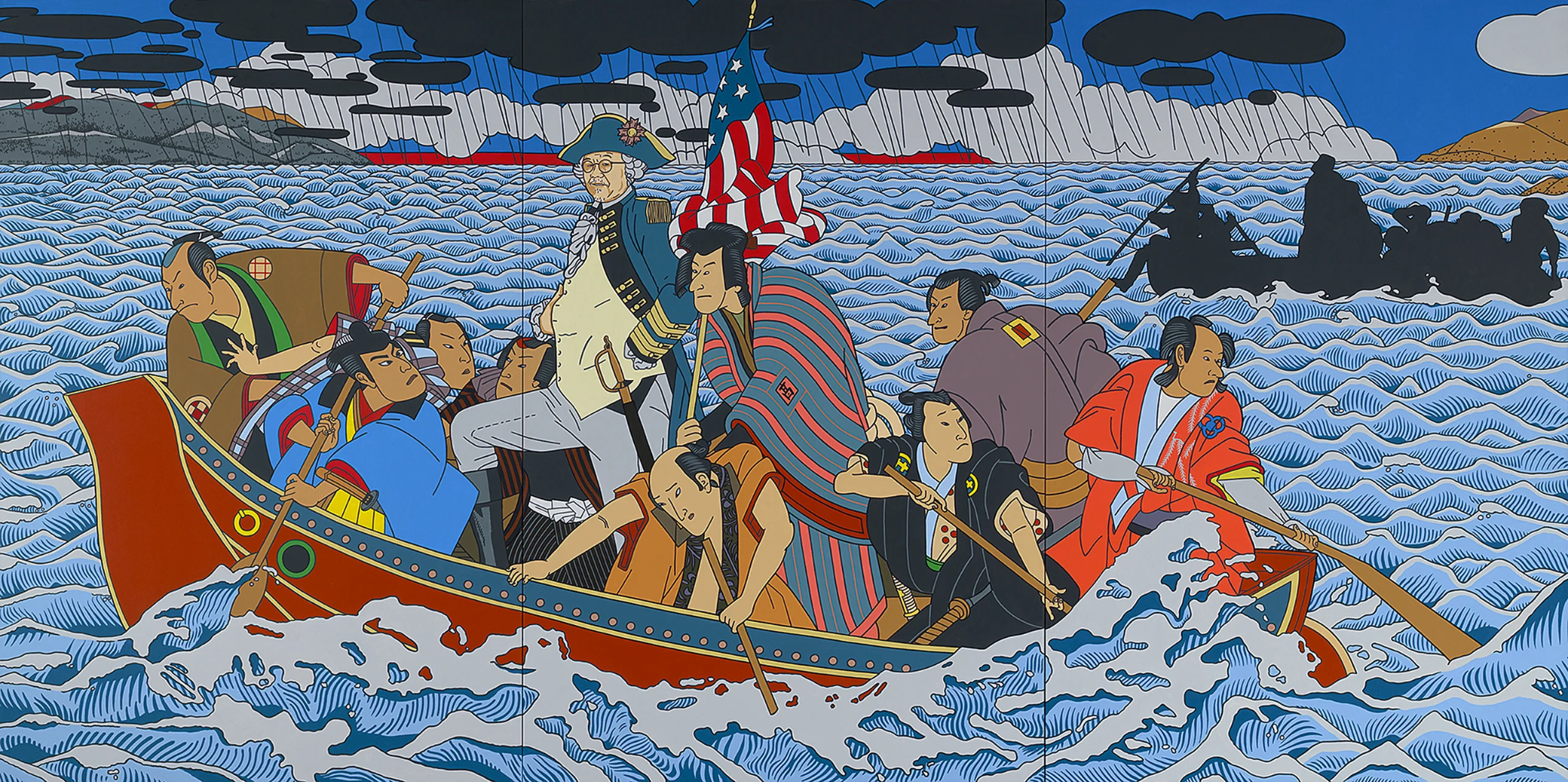
Shimomura places himself in Washington’s role and fills the boat with Japanese samurai. The setting resembles San Francisco Harbor, with Angel Island in the background, bringing questions about immigration and belonging into a familiar national image.
Look closely: How do Shimomura’s changes to Leutze’s painting change who belongs in America’s story?
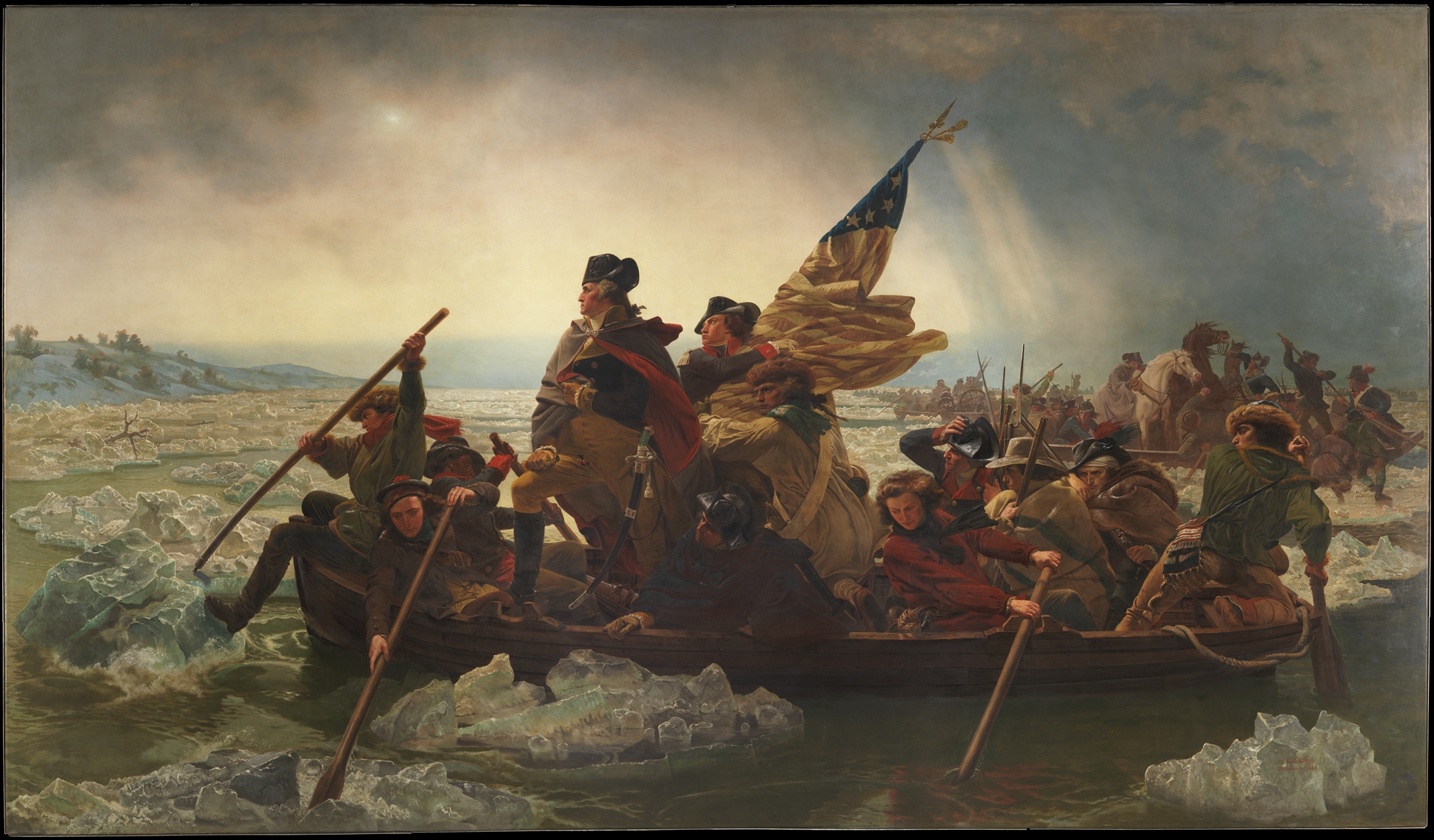
Public domain / The Met Open Access (CC0). The Metropolitan Museum of Art; gift of John Stewart Kennedy, 1897, 97.34.
Painted long after the Revolution, this dramatic crossing turns history into a national story. Look at who shares the boat and how the light and Washington’s pose guide your attention.
Look closely: What does the crew’s composition suggest about who helped build the nation?
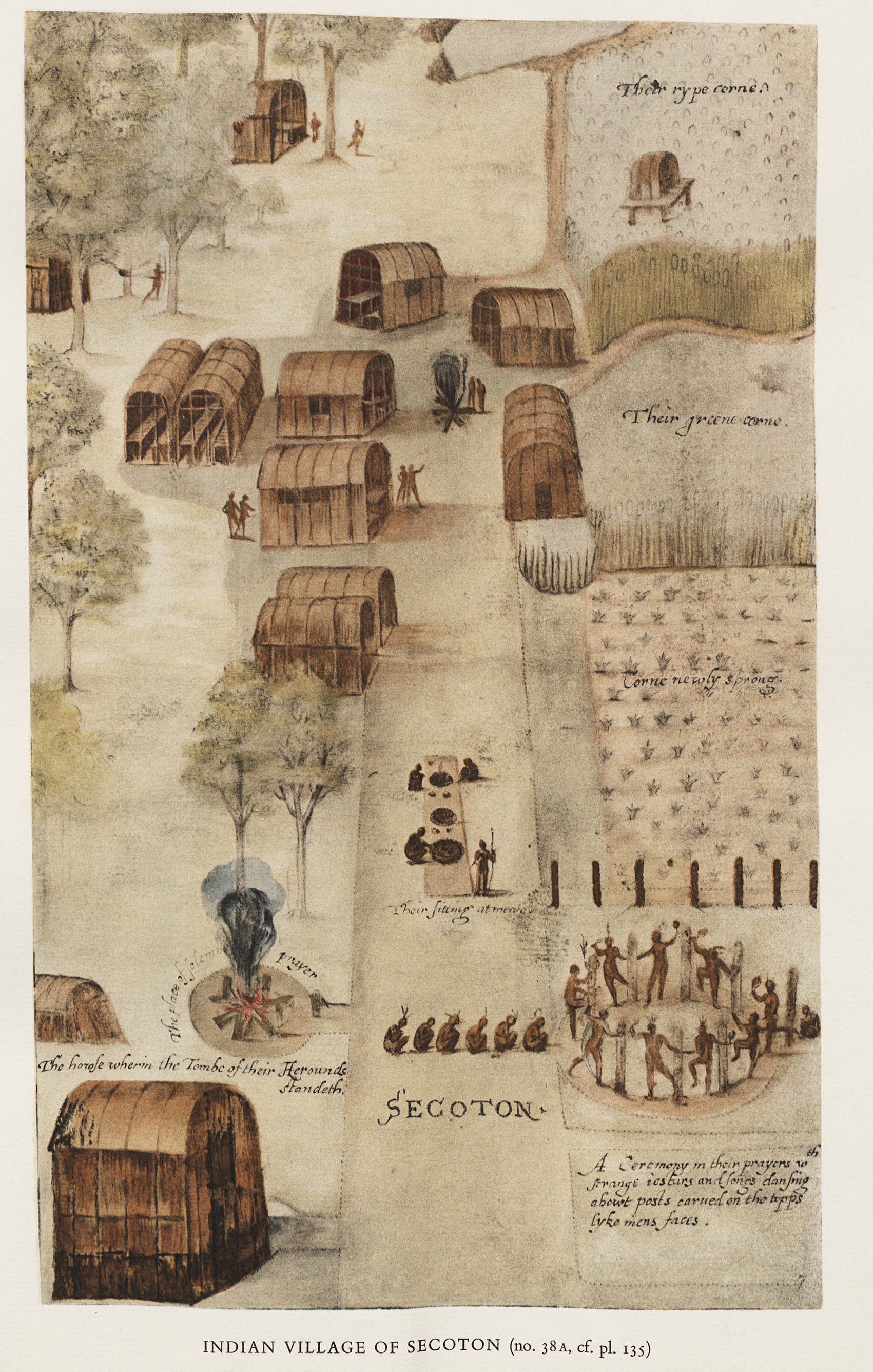
Public-domain artwork. British Museum, 1906,0509.1.7; historical reproduction via Jamestown-Yorktown Foundation.
White’s view records houses, cornfields at different stages, and community activity. Use these details to test colonial claims that Native people did not work or organize their land.
Look closely: Which three details offer the strongest evidence of an organized community?
Public-domain artwork. Courtesy of the Autry Museum of the American West, 92.126.1.
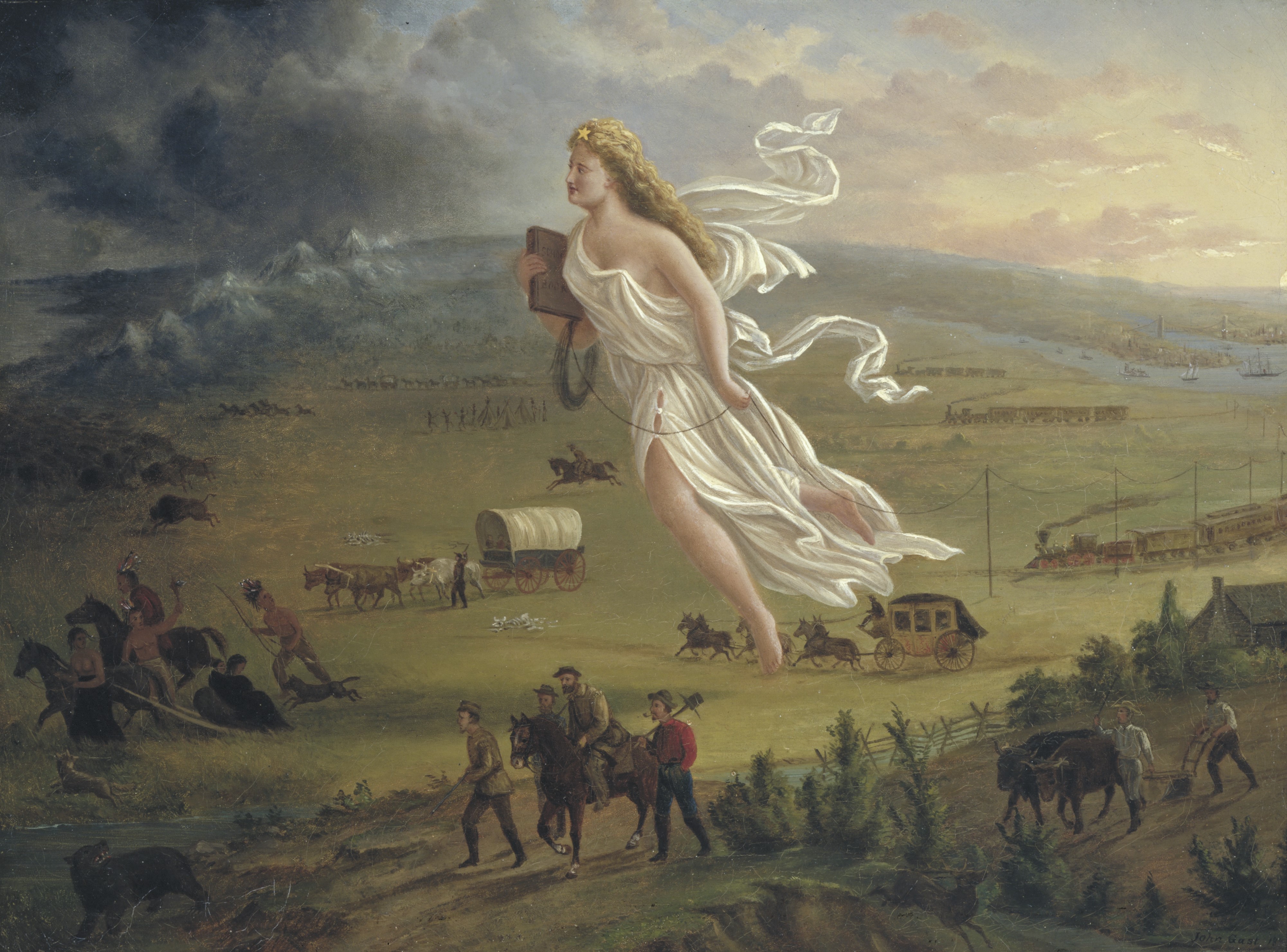
A floating woman carries a book and telegraph wire above settlers and machines, while Native people and bison retreat. The contrast between light and darkness presents westward expansion as progress and invites us to ask whose losses that story hides.
Look closely: How does Gast use light and placement to tell viewers who represents the future?
Public domain. Heinz Family Collection; reproduction via Wikimedia Commons and The Victorian Web.
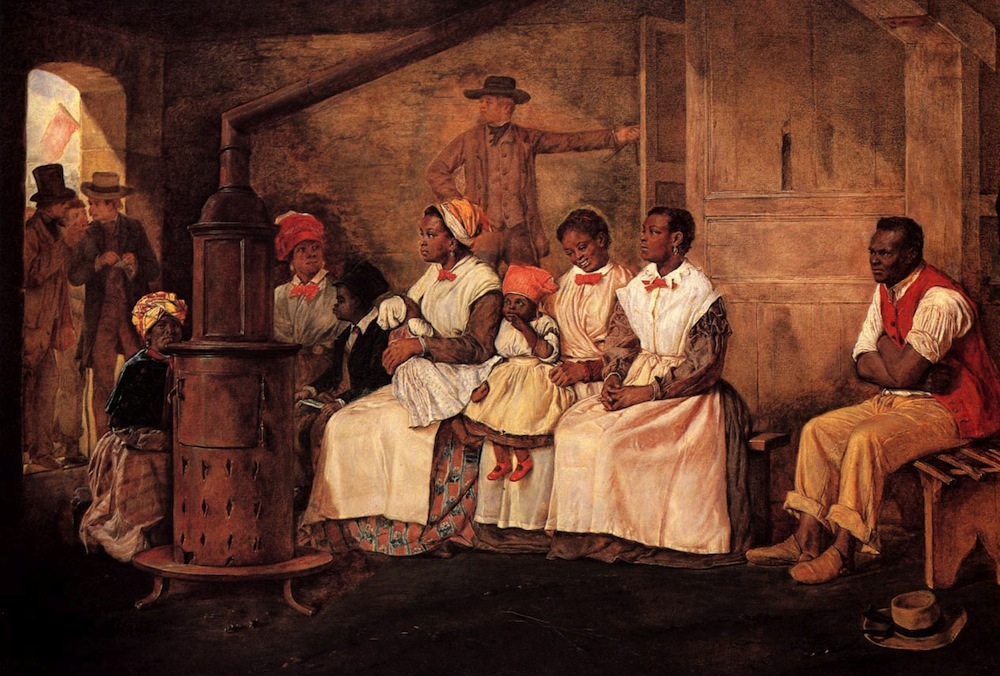
Crowe shows enslaved people waiting in a Richmond salesroom, based on a visit he made in 1853. Their postures and expressions put individual lives inside the domestic slave trade’s business system.
Look closely: Choose one person’s posture or expression. What can that detail reveal, and what can it not tell you?
Public-domain artwork. Crystal Bridges Museum of American Art, Bentonville, Arkansas, 2010.74.
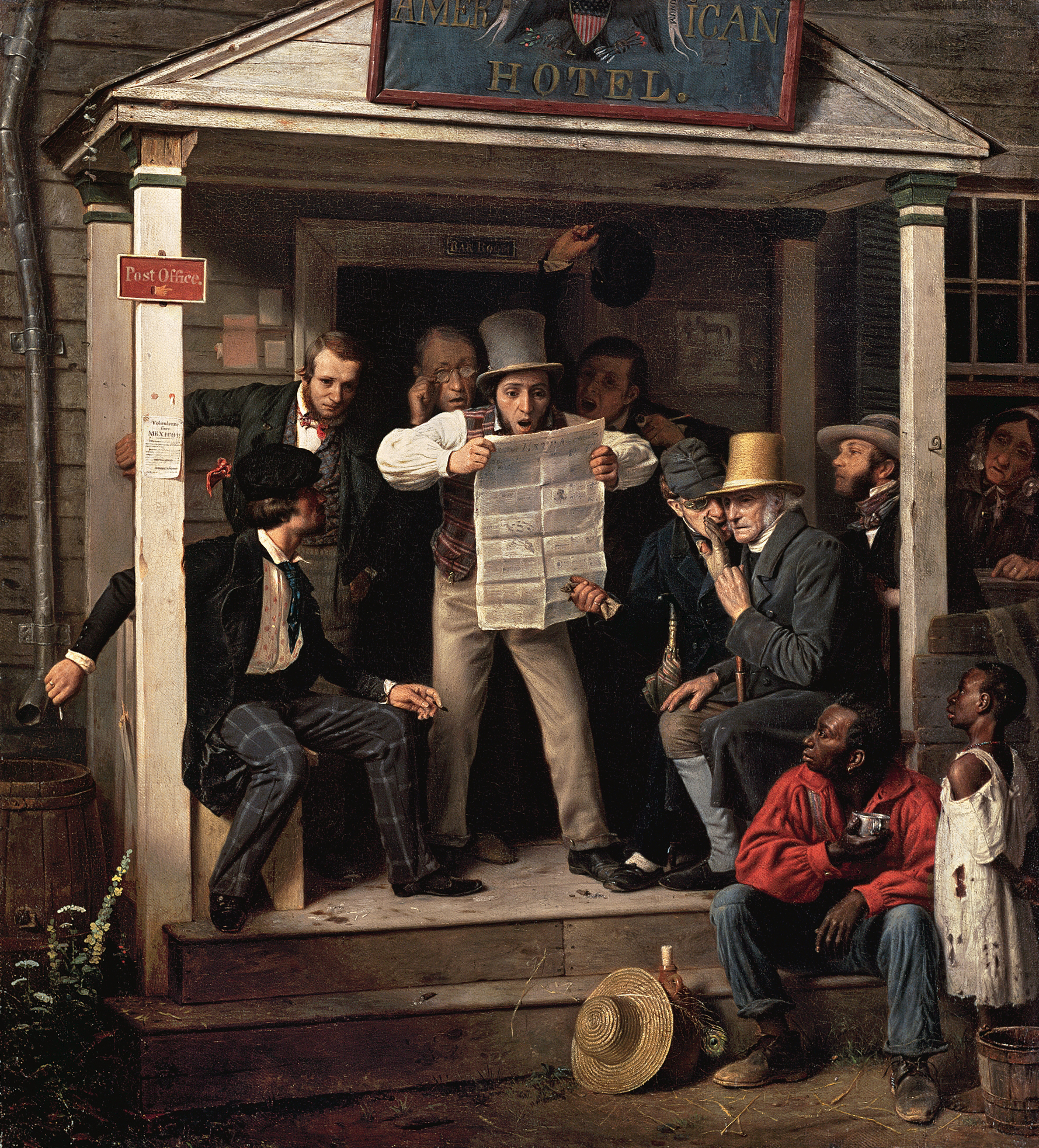
News of the war reaches the hotel porch through a newspaper. The placement of white men, a woman, and a Black man and child offers evidence about who held political power and who remained at its edges.
Look closely: Who is inside the porch, who is at its edges, and what might those positions mean?
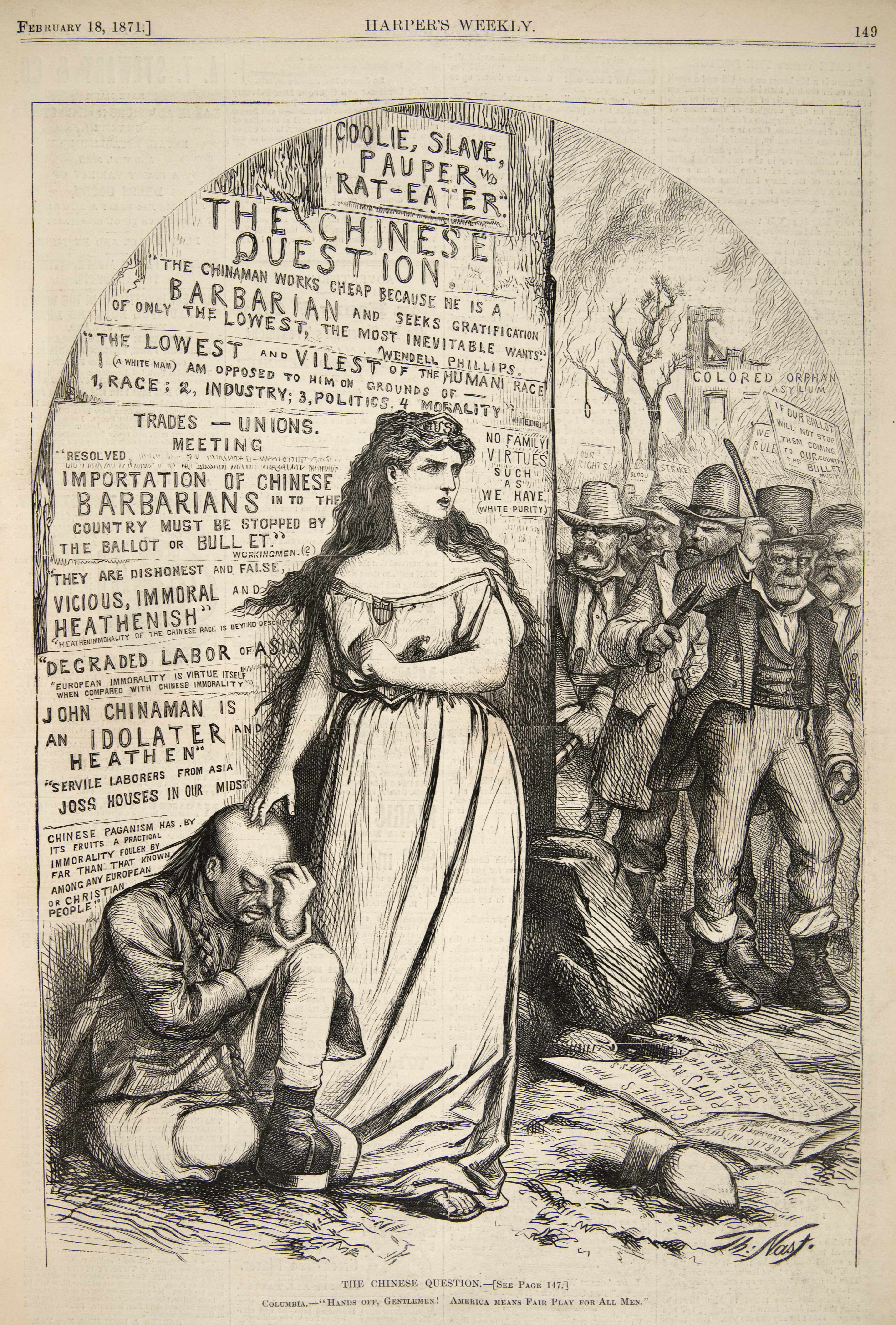
Public-domain cartoon, Harper’s Weekly, p. 149. Walfred/University of Delaware scan, via Illustrating Chinese Exclusion; noncommercial use with attribution and source link.
Columbia shields a Chinese man from a threatening mob. Nast argues against anti-Chinese violence while using an anti-Irish caricature, making the image useful for examining how a picture can resist and repeat stereotypes.
Look closely: Where does this cartoon challenge a stereotype, and where does it create or repeat one?
The Metropolitan Museum of Art. Gift of AXA Equitable, 2012, 2012.478a.
Machines fill this panel of the ten-part mural America Today. Pair it with Takaki’s accounts of workers to ask whose labor powers a picture of industrial progress.
Look closely: Which workers would you need to add to show how these machines actually operate?
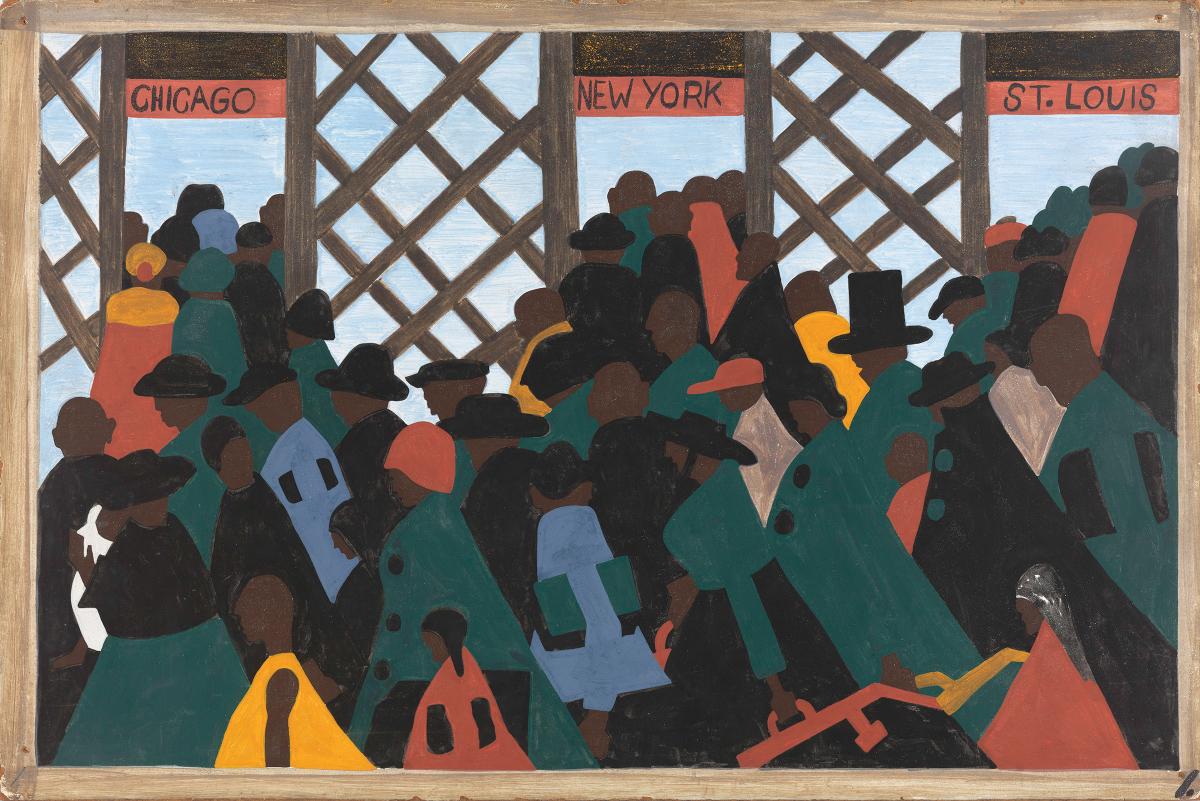
A crowd heads toward gates marked Chicago, New York, and St. Louis. This first panel begins a sixty-part history of Black migration, connecting people’s decisions to larger forces of work, safety, and opportunity.
Look closely: How do the station signs and repeated shapes help you read this crowd as a movement?
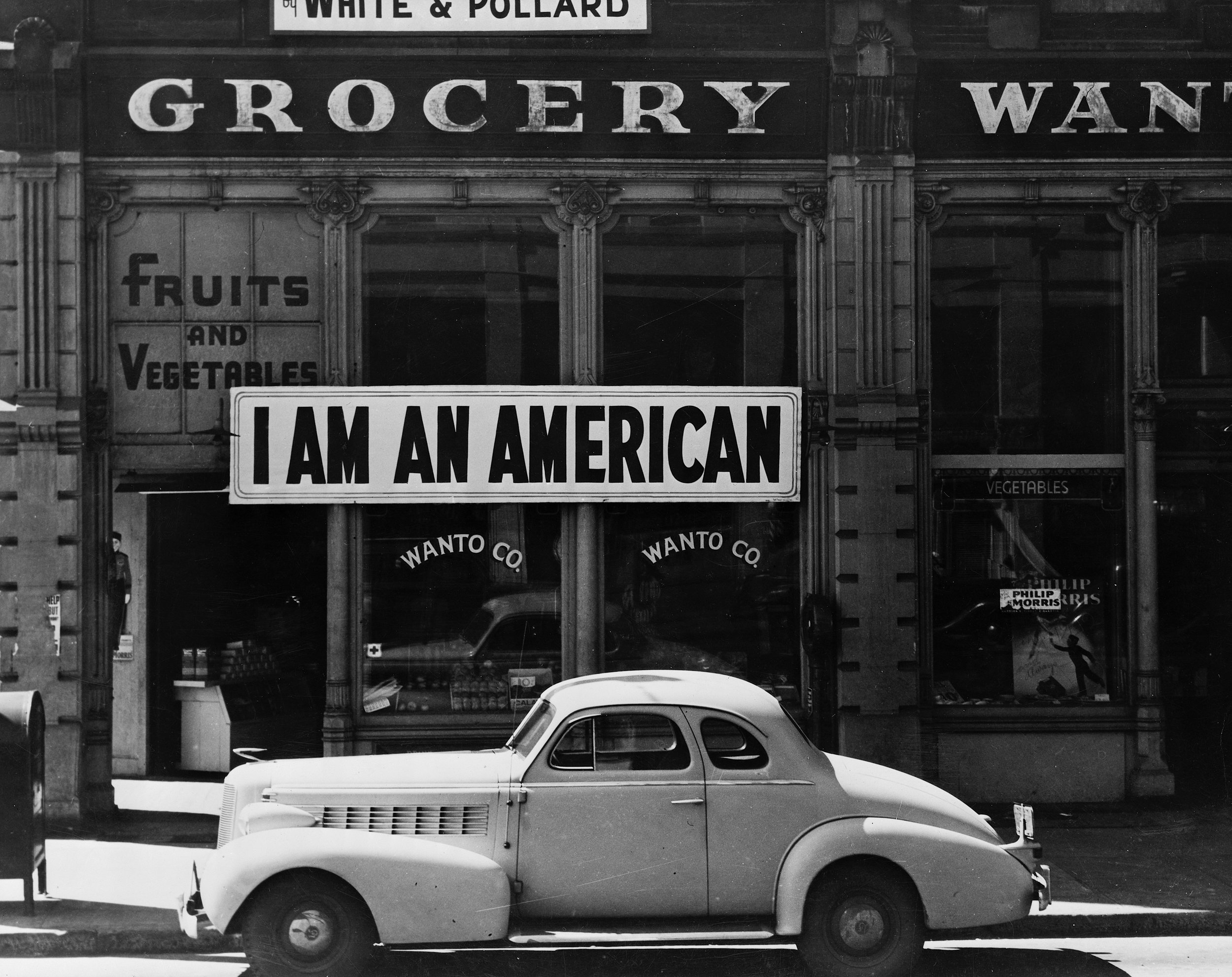
Public domain, U.S. federal work. Dorothea Lange / War Relocation Authority; Library of Congress, LC-USZ62-23602; National Archives negative 210-G-A35. LOC scan reproduced via Anchor Editions.
The storefront’s “I AM AN AMERICAN” sign declares belonging while wartime removal policies targeted Japanese Americans. Read the photograph as evidence about the gap between citizenship and treatment.
Look closely: What does the sign claim, and why might the owner have felt a need to say it publicly?