Takaki216
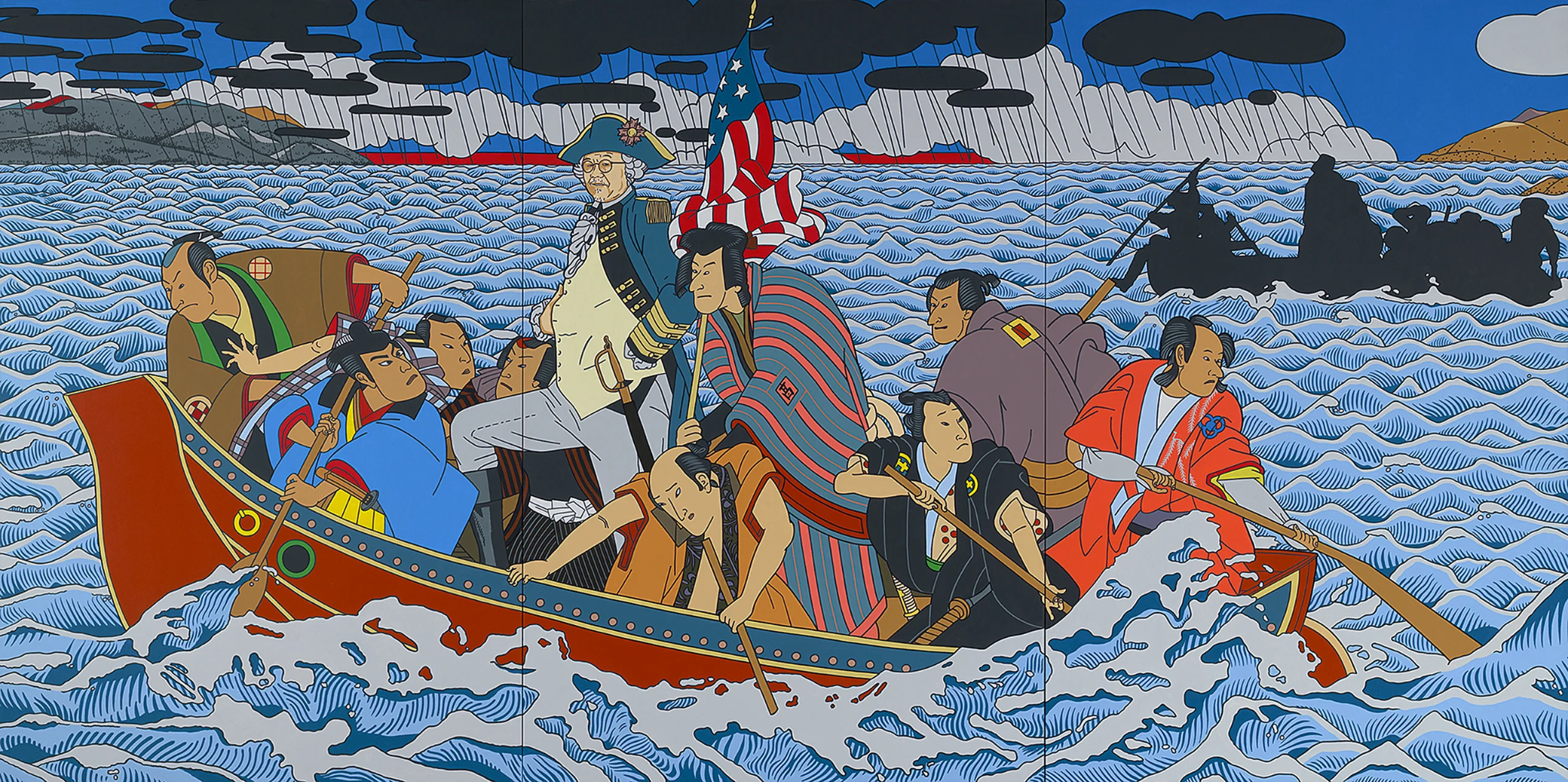
Detail of Roger Shimomura’s Shimomura Crossing the Delaware.
Roger Shimomura, Shimomura Crossing the Delaware

Key idea 01 · Across the whole book

Economic forces shape history

How does the struggle over land, work, and income change who has power—and who belongs?

Gist

People make choices to get land, money, and the things they need. Those choices can change other people’s lives.

Check your understanding
Check your understanding: A team wants prize money and decides to practice longer. What is the economic goal?

Academic definition

Economic interests shape historical change when people use power to control resources, organize labor, and distribute wealth. Explain the decisions connecting an economic goal to its consequences.

Check your understanding
Check your understanding: Which explanation connects an economic interest to a historical decision?

Elaboration

Economics asks who controls land, labor, credit, and income—and who gains or loses when those arrangements change. Takaki links tobacco profits to colonial demand for Native land and workers. Money does not act by itself: owners and officials make decisions that turn an opportunity for profit into a particular social order.

The rules matter as much as the resources. Virginia planters used law to keep servants working longer; after the war against Mexico, legal fees and unequal access to credit helped transfer Mexican land to Anglos. Comparing these cases reveals how political power can turn an economic advantage into a lasting barrier for others.

People also reshape economic relationships. Mexican farmworkers organized against wage cuts, while wartime hiring opened jobs previously closed to minority workers. Yet earnings, citizenship, and equal treatment do not always arrive together. Read alongside these struggles, the epilogue's account of freedom raises a question: what resources do people need to make independence meaningful?

YPT 6 YPT 33 YPT 53 YPT 135–136 YPT 242–243 YPT 280 YPT 282–283 YPT 338–340
Check your understanding
Check your understanding: Why is “money caused everything” too weak?

Trace interests into consequences

  1. 01

    Identify the pressure

    Find the changing demand for land, labor, goods, or wages.

  2. 02

    Locate the power

    Ask who controls property, hiring, credit, and the rules governing them.

  3. 03

    Follow the choices

    Show how officials, employers, and workers use laws, recruitment, exclusion, or organizing.

  4. 04

    Compare the results

    Explain whose choices expand, whose narrow, and how resistance changes the outcome.

Compare across chapters

Follow the connections

01

Land changes hands through power

Across colonization and later federal Indian policy, land promised income to settlers and businesses. That promise became dispossession through particular decisions: warfare, removal, and changes to ownership rules. Following these steps explains how economic interests shaped policy without treating westward expansion as unavoidable.

Chapter 2

Virginia tobacco growers wanted fields that Powhatan farmers had already cleared. Profitable exports encouraged more settlers to arrive, increasing pressure on Native land and deepening a conflict over who could control the same productive ground.

YPT 32–33
Chapter 4

Jackson supported the removal of Native communities while states challenged their treaty protections. The chapter connects that removal to the cotton-growing South and later shows railroad companies lobbying for routes through Native lands.

YPT 69–71 YPT 79
Chapter 9

Allotment changed tribal landholding into individual parcels and made land labeled surplus available to white settlers. Railroad interests also gained access through congressional grants, showing how government decisions opened resources to outside businesses.

YPT 174–175

The common pattern is a connection between profitable land and institutions powerful enough to reassign its control. The methods differ: colonial seizure, forced removal, and allotment were distinct processes. Ask whose definition of useful land prevailed, and why existing Native farming or ownership did not secure equal protection.

02

Migration connects two unequal economies

Migration follows more than a wage difference. People may lose viable livelihoods at home while employers elsewhere seek their labor. Reading departure and arrival together shows how trade, land use, and labor demand connect distant places—and why finding work does not necessarily bring security or acceptance.

Chapter 6

English landlords in Ireland shifted land toward cattle production for British markets and continued exports during famine. Displaced and impoverished people migrated to America, where construction projects offered jobs but often assigned Irish workers dangerous, insecure work.

YPT 106 YPT 108–109
Chapter 8

War, taxes, floods, and famine helped drive Chinese migration; gold and railroad wages attracted workers to California. When mining profits fell and racial hostility narrowed employment, many migrants changed industries or opened small businesses.

YPT 146–147 YPT 149 YPT 151–152
Chapter 16

The chapter links subsidized US corn sold in Mexico under NAFTA to farmers losing their livelihoods, then connects migration north to US growers' demand for labor. It presents displacement and labor demand as parts of one relationship.

YPT 331–332

These cases connect hardship in one place with demand in another, but the pressures differ: landlord decisions during famine, upheaval alongside new industries, and trade policy. Migrants make choices within those conditions. Employers' willingness to hire them does not establish a government's willingness to grant equal rights or welcome permanent settlement.

03

Workers can change the balance

Employers gain bargaining power when workers compete or distrust one another; workers gain it when they can withhold labor together. Shared hardship alone does not create unity. Organization, community support, and decisions about racial or ethnic boundaries help explain why similar workplace pressures produced different outcomes.

Chapter 10

Hawaiian planters recruited multiple nationalities to discourage united strikes. Japanese and Filipino workers nevertheless joined the 1920 stoppage. Employers broke the strike through division and pressure, yet raised wages afterward: defeat and material gains coexisted.

YPT 192 YPT 198–199
Chapter 11

Payment by output pushed garment workers to work faster. Women helped turn local walkouts into a mass strike supported by their neighborhoods. Many firms reached settlements, although those gains did not ensure safety at the Triangle factory.

YPT 223 YPT 225–226
Chapter 13

Chicago employers paid Richard Parker to organize a separate Black union and discourage workers from joining white unionists. When a white labor council opened membership to Black workers, the offer was rejected, preserving the division management wanted.

YPT 261–262

The comparison shifts attention from whether workers suffered to whether they could act together. Hawaii shows cooperation across ethnic lines; the garment strike drew strength from community networks. Chicago shows an employer-supported organization blocking a wider alliance. Each outcome depended on how people organized economic pressure, not simply on having common interests.

04

Rights need material opportunities

A legal victory can transform people's status while leaving major economic barriers in place. Conversely, a labor shortage can open jobs before discrimination ends. Comparing emancipation, wartime employment, and civil rights reveals that legal rights and economic independence interact, but neither automatically delivers the other.

Chapter 5

After emancipation, freedpeople sought land to support independent lives. Federal action restored land to former planters instead. Many freedpeople became wage workers or sharecroppers, with debts at planter-owned stores limiting their ability to acquire land.

YPT 97–99
Chapter 14

Wartime demand and an executive order against discrimination in government and defense employment expanded job openings. Black, Chinese American, and Mexican American workers entered defense industries, while segregated housing and racial hostility continued to restrict everyday life.

YPT 280–283 YPT 285
Chapter 15

Civil rights laws expanded protections in employment, voting, and public accommodations. Yet factories closed or moved away from urban Black communities. Equal access in law could not itself supply nearby, stable jobs when the structure of employment changed.

YPT 311–313

Emancipation ended ownership of people, a change fundamentally different from later hiring reforms. Still, all three cases require examining resources alongside rights. Land distribution, job location, and workplace access shaped what people could do with new freedoms. The comparison explains incomplete gains without dismissing the importance of the victories.

Find it in every chapter

17 chapter connections

Open a chapter for its explanation, supporting evidence, and original page links.

01Why a Different Mirror?

The introduction links demand for labor to migration and exploitation, while showing that workers could become rivals or allies. Economic contribution did not guarantee equal rights: Chinese workers were wanted for their labor but denied acceptance as settlers. Shared interests could also support organizing across racial and ethnic divisions.

  • Chinese migrants worked in mines, railroads, farms, and factories, yet faced exclusion from immigration during an economic depression.

    YPT 10–11
  • Mexican and Japanese farmworkers struck together in California in 1903; Japanese and Filipino laborers did so in Hawaii in 1920.

    YPT 18

How could the same labor system produce both competition and cooperation?

Open Chapter 1 study guide ↗
02Removing the “Savages”

Land made colonization profitable. Virginia tobacco growers wanted Powhatan fields; New England settlers wanted fertile farms. These interests help explain why colonial expansion continued and why claims about Native peoples changed as settlers sought more territory.

  • Profitable tobacco farming increased the demand for cleared Powhatan land and drew more settlers to Virginia.

    YPT 33
  • New England settlers competed for limited farmland already cultivated by Native communities. Jefferson later proposed using credit and debt to pressure Native people to sell land.

    YPT 35–36 YPT 41

How does following the demand for land change your explanation of colonial violence?

Open Chapter 2 study guide ↗
03The Hidden Origins of Slavery

The tobacco market raised demand for labor and land, but access to those resources depended on political choices. Elite landowners used legislative power to extend service and reduce competition. When that arrangement generated unrest, they chose a more deeply racialized labor system to protect their economic and political advantages.

  • Elite control of land and the legislature let planters lengthen indentures, sustaining their workforce and limiting new competitors for land.

    YPT 53
  • After Bacon’s Rebellion, planters rejected wider opportunities for poor whites and expanded reliance on enslaved African labor.

    YPT 58–59

How did the same elite protect both its supply of labor and its control of land?

Open Chapter 3 study guide ↗
04The Road to the Reservation

Land could generate wealth through speculation, cotton farming, and railroad expansion. The chapter shows people pursuing those gains through treaties, state power, and corporate lobbying. Economic interests became forces of removal because governments and businesses acted to reduce Native control over valuable territory and routes.

  • Jackson profited by buying and reselling former Chickasaw land; the chapter later connects removal to the expansion of the cotton-growing South.

    YPT 68 YPT 70–71
  • Railroad companies sought rights-of-way through Native land and pushed policy changes to advance settlement and business growth.

    YPT 79

Which step turned a desire for profit into a policy that affected another people’s land?

Open Chapter 4 study guide ↗
05Life in Slavery

Slavery allowed owners to command labor and collect income from plantation work or hiring people out. The chapter connects planter power to defending those profits in the Civil War, then follows a new form of dependence after emancipation: land concentrated in planter hands helped keep freedpeople working and indebted.

  • Southern urban slaveholders received payments when enslaved people worked for other employers; the planter class defended its right to profit from slavery.

    YPT 92 YPT 95
  • After land was restored to former planters, many freedpeople worked for wages or crop shares and struggled with debts at planter-owned stores.

    YPT 98–99

How did the source of an owner’s income change after emancipation, and what sources of power remained?

Open Chapter 5 study guide ↗
06The Flight from Ireland

Profit-seeking land use helped make Irish tenants vulnerable to famine, while American employers' demand for labor attracted migrants. In the United States, access to wages did not guarantee security: employers could use dangerous assignments or replacement hiring to protect profits and weaken workers' bargaining power.

  • Landlords replaced crop farming with cattle pasture for British markets, displacing tenants and agricultural workers; exports continued during famine.

    YPT 106 YPT 108
  • At North Adams, replacement hiring allowed production to continue and frightened nearby strikers into returning at lower pay.

    YPT 110–111

How did the same search for profit create jobs for some people while taking security from others?

Open Chapter 6 study guide ↗
07The War Against Mexico

The chapter links territorial conquest to cotton land, slavery, raw materials, and Pacific trade. After the war, property law and access to credit helped redistribute land, while racial wage differences made Mexican labor profitable. Economic power shaped both the decision to expand and the social order built afterward.

  • American slaveholders sought Texas cotton land, while Polk described California's harbors as gateways to profitable trade with China and other Asian countries.

    YPT 126 YPT 130
  • Landowners could lose property through legal costs and debt; Mexican workers later received lower wages even for the same work as Anglos.

    YPT 136 YPT 139

How did the gains sought before the war connect to the inequalities created afterward?

Open Chapter 7 study guide ↗
08From China to Gold Mountain

Hardship in China and higher possible earnings in California encouraged migration, while American development created demand for workers. As industries changed and racial hostility narrowed options, many Chinese people shifted occupations or opened small businesses. Labor markets shaped migration and livelihoods, but workers also organized and brought skills of their own.

  • War, high taxes, famine, and floods pushed people from China; news of gold and higher railroad wages drew people toward California.

    YPT 146–147
  • Mining's decline moved workers toward railroads, while discrimination later pushed many toward stores, restaurants, and inexpensive-to-open laundries.

    YPT 149 YPT 151–152

Which economic changes expanded Chinese migrants' choices, and which narrowed them?

Open Chapter 8 study guide ↗
09Dealing with the Indians

Land policy opened resources to white settlers and businesses while weakening Native economic independence. The chapter connects allotment to farms and railroad interests, and stock reduction to a dam serving California. Material benefits help explain why programs described as reform or protection could persist despite Native objections and harmful effects.

  • Officials and businesses recognized that allotment could open reservation lands to white settlement; Congress also granted railroad access through Native territories.

    YPT 174–175
  • Concern about silt threatening Boulder Dam linked livestock policy to outside agricultural and electricity interests, while Navajo herders lost animals and increasingly relied on government wages.

    YPT 181–182

How does identifying the economic beneficiaries change an explanation based only on officials' stated intentions?

Open Chapter 9 study guide ↗
10The Japanese and “Money Trees”

Heavy taxation and debt pushed Japanese farmers to migrate, while high wages and plantation demand pulled them toward Hawaii. Employers then organized work to limit labor costs and worker power. Migration and resistance were therefore shaped by who controlled land, wages, and access to jobs.

  • Farmers sold land to pay taxes and debts; reports of much higher wages encouraged emigration.

    YPT 187–188
  • Planters recruited a mix of nationalities to discourage united strikes and reserved higher-status work for whites.

    YPT 192–193

How did the same plantation economy create opportunity for migrants and pressure to resist?

Open Chapter 10 study guide ↗
11Jews Are Pushed from Russia

Russian restrictions concentrated Jewish workers in crowded trades, while New York’s growing clothing industry created demand for their skills. In sweatshops, payment by output rewarded speed and exposed workers to exhausting conditions. Shared economic pressures then helped produce strikes, union growth, and resources for education.

  • Limits on residence and landownership restricted Jewish economic options in Russia and intensified competition within available trades.

    YPT 215–216
  • Garment contractors and teams were paid by output; later mass strikes won settlements and strengthened unions.

    YPT 222–223 YPT 226–227

How did payment arrangements connect a booming industry to workers’ demands for change?

Open Chapter 11 study guide ↗
12Up from Mexico

Demand for agricultural and industrial labor pulled Mexican migrants north, while seasonal harvesting kept many moving between jobs. Employers benefited from low wages and limited alternatives. During the Depression, wage cuts prompted strikes, while unemployment helped authorities justify expulsion; workers and officials made different choices within the same economic crisis.

  • Mexican workers supplied much of agricultural labor in California and Texas, and many followed crops seasonally.

    YPT 241–242
  • The 1933 strike challenged pay cuts, while Depression-era agencies pressured or forced families to leave the United States.

    YPT 243 YPT 249

Why did an economic downturn produce both worker solidarity and campaigns for removal?

Open Chapter 12 study guide ↗
13Blacks Arrive in Northern Cities

Sharecropping debt restricted southern families’ choices, while wartime labor shortages changed northern employers’ willingness to hire Black workers. Migration followed this opening, but unequal housing and workplace power shaped the gains. The Depression later exposed how vulnerable those gains remained when jobs and income collapsed.

  • Sharecropping often left families deeper in debt, while World War I labor shortages brought recruiters south.

    YPT 256–257
  • During the Depression Black workers faced especially severe unemployment and unequal treatment in relief programs.

    YPT 266–267

How can an expanding economy open doors without removing the institutions that keep opportunity unequal?

Open Chapter 13 study guide ↗
14World War II and America’s Ethnic Problem

War production and military recruitment changed employers’ demand for labor, creating openings for workers previously excluded from better-paid jobs. These gains remained uneven because racial housing and workplace barriers persisted. Economic pressure also mattered to Navajo enlistment: the chapter links poverty and dependence on wages to the attraction of military service.

  • Defense industries hired more African Americans and women as labor became scarce; Chinese and Mexican American workers also entered shipyards and aircraft plants.

    YPT 280 YPT 282–283 YPT 285
  • The chapter connects federal livestock reductions on the Navajo reservation to poverty and reliance on wages, one reason young men considered military service.

    YPT 287

How did wartime labor demand interact with existing inequalities to create different choices?

Open Chapter 14 study guide ↗
15Calls for Change

Legal victories changed what employers and public institutions could do, but they did not guarantee employment or income. As factories closed or moved, many urban Black workers lost access to stable work. The chapter also links class differences to tensions within a coalition that had shared goals against discrimination.

  • Plants and offices moved to suburbs and manufacturing jobs moved offshore; the chapter connects these changes to reduced opportunities for urban Black workers.

    YPT 313
  • The chapter describes tensions involving some Jewish store owners and landlords and Black residents, connecting these to economic and class divisions within the civil rights alliance.

    YPT 310

How could people support equal legal rights yet disagree about what economic equality required?

Open Chapter 15 study guide ↗
16New Waves of Newcomers

Economic change can both displace people and attract their labor elsewhere. The chapter links subsidized US corn and farm losses in Mexico to migration north, while US growers’ labor demand helps explain continued arrivals. Its Chinese immigrant accounts also show that education alone did not overcome language barriers or poor working conditions.

  • The chapter connects cheaper subsidized corn under NAFTA to Mexican farm bankruptcies, then describes US agricultural employers’ need for workers.

    YPT 331–332
  • Some Chinese immigrant women worked long hours for low pay, while a former professional couple struggled until language and career training expanded the wife’s opportunities.

    YPT 319–320

How do employers, trade rules, and access to training influence the choices migrants can make?

Open Chapter 16 study guide ↗
17“We Will All Be Minorities”

The epilogue’s compressed examples connect political ideals to control of labor, land, and livelihoods. Slavery and Native dispossession were not only failures of equal recognition; they also organized material power. Reading those examples economically helps explain why the history of freedom includes struggles over the resources people need to live independently.

  • The epilogue contrasts the Declaration’s equality claim with a Constitution that protected slavery, directing attention to the institutions beneath national ideals.

    YPT 338
  • It describes continental expansion as taking Native land and damaging culture and livelihoods, linking a national freedom story to others’ material losses.

    YPT 338

What changes in our understanding of freedom when we ask who controlled labor, land, and livelihoods?

Open Chapter 17 study guide ↗

Build your own connection

Compare two chapters in which people sought greater economic independence. How did control over a resource or a rule help explain their different outcomes?

Build a comparison using your own evidence. Each bracket names the kind of information to supply.

Although [group and chapter] and [other group and chapter] both sought [resource or gain], their outcomes differed because [person or institution] controlled [resource or rule] and chose to [action].

One possible model

Although Irish families in Chapter 6 and Mexican farmers in Chapter 16 both lost viable livelihoods, their situations differed because British landlords controlled Irish land and kept food exports moving, while trade policy connected displacement in Mexico to U.S. growers’ demand for labor.

YPT 106 YPT 331

Why it works: The sentence names both groups, identifies who controlled land or rules, and uses although and because to explain a meaningful similarity and difference.