Takaki216

How were the push and pull factors driving the Great Migration similar and different to the migrations of other groups in American history?

Gist response

Black southerners moved north to escape debt, Jim Crow, and racial violence and to pursue industrial jobs and greater freedom. Like earlier migrants, they followed work and information from friends, relatives, and newspapers. Unlike immigrants crossing a national border, they were already Americans moving within their own country, yet citizenship did not protect them from racial exclusion.

OPT 312–317 · OPT 132–133 · OPT 293–294

Read

Read with the question in mind

Full OPT chapter and audio →

Understand

Organize the relationship

Compare the forces behind migration
CasePressure to leaveOpportunity and route
Black southernersDebt, crop damage, Jim Crow, and racial violence made staying difficult.Wartime labor shortages, recruiters, railroads, and the Black press connected migrants to northern cities.OPT 312–317 · OPT 319
Irish migrantsColonial land policies and landlords’ conversion of farms to grazing displaced rural people.Emigration offered a way out, but leaving could be experienced as exile.OPT 132–133
Mexican migrantsLand loss, poverty, and revolutionary violence uprooted families.Higher wages, personal networks, labor agents, and railroads drew people north across the border.OPT 293–294

Explore the evidence

Read around each passage. Ask what it supports, what it complicates, and how you would explain the connection.

Debt and crop loss push people away

“Though they were free, many were in economic bondage.”

Takaki’s narration · OPT 313

Freedom from slavery did not give sharecroppers control of land or relief from debt. Economic dependence made leaving the South attractive.

How could legal freedom coexist with economic dependence?

War creates a demand for labor

“Facing tremendous labor shortages, factory managers dispatched labor recruiters to the South.”

Takaki’s narration · OPT 313

World War I reduced European immigration and increased the need for workers. Employers recruited Black southerners because the labor market had changed.

How did a war across the Atlantic affect migration within the United States?

Migrants also sought dignity

“there's no chance for a coloured man who has any self-respect.”

A Black Mississippian describing life in the South, quoted by Takaki · OPT 316

The speaker connects migration to self-respect as well as wages. Jim Crow and racial violence made remaining in the South costly in ways a pay comparison alone cannot explain.

What would an explanation focused only on higher wages leave out?

Compare economic dependence in Mexico

“Forced to become tenant farmers and sharecroppers, the peasants had become especially vulnerable to exploitation.”

Takaki’s narration about Mexican peasants · OPT 293

Loss of control over land also pushed Mexican families to migrate. This resemblance does not erase the difference between crossing an international border and moving within one’s country.

Which similarity is economic, and which difference concerns citizenship and borders?

Connect a Key Idea

Economic forces shape history

Explain how northern labor demand and southern dependence on landlords worked together to make migration possible and desirable.
OPT 312–314

Race is socially constructed

Migrants sought to escape rules of racial subordination, but northern housing and labor institutions built new barriers.

OPT 316 · OPT 319–322

Ideas are weapons

The Chicago Defender spread job information and presented the North as a place to claim dignity; examine how this message encouraged action.

OPT 314 · OPT 316–317

Develop your response

Start with the gist, then make it more precise using a detail, a relationship, or a qualification from the reading.

Build the next sentence

  • Because ___ made staying in the South difficult, migrants ___; meanwhile, ___ made the North seem possible.
  • Like ___, Black southerners ___; however, the migrations differed in ___.
  • Although northern jobs promised ___, migrants still faced ___.
Add context with an appositive
  • the Chicago Defender, a Black newspaper that publicized northern jobs and challenged southern racism, … OPT 314 · OPT 316
  • Robert Abbott, the owner of the Chicago Defender, … OPT 314

Push your thinking

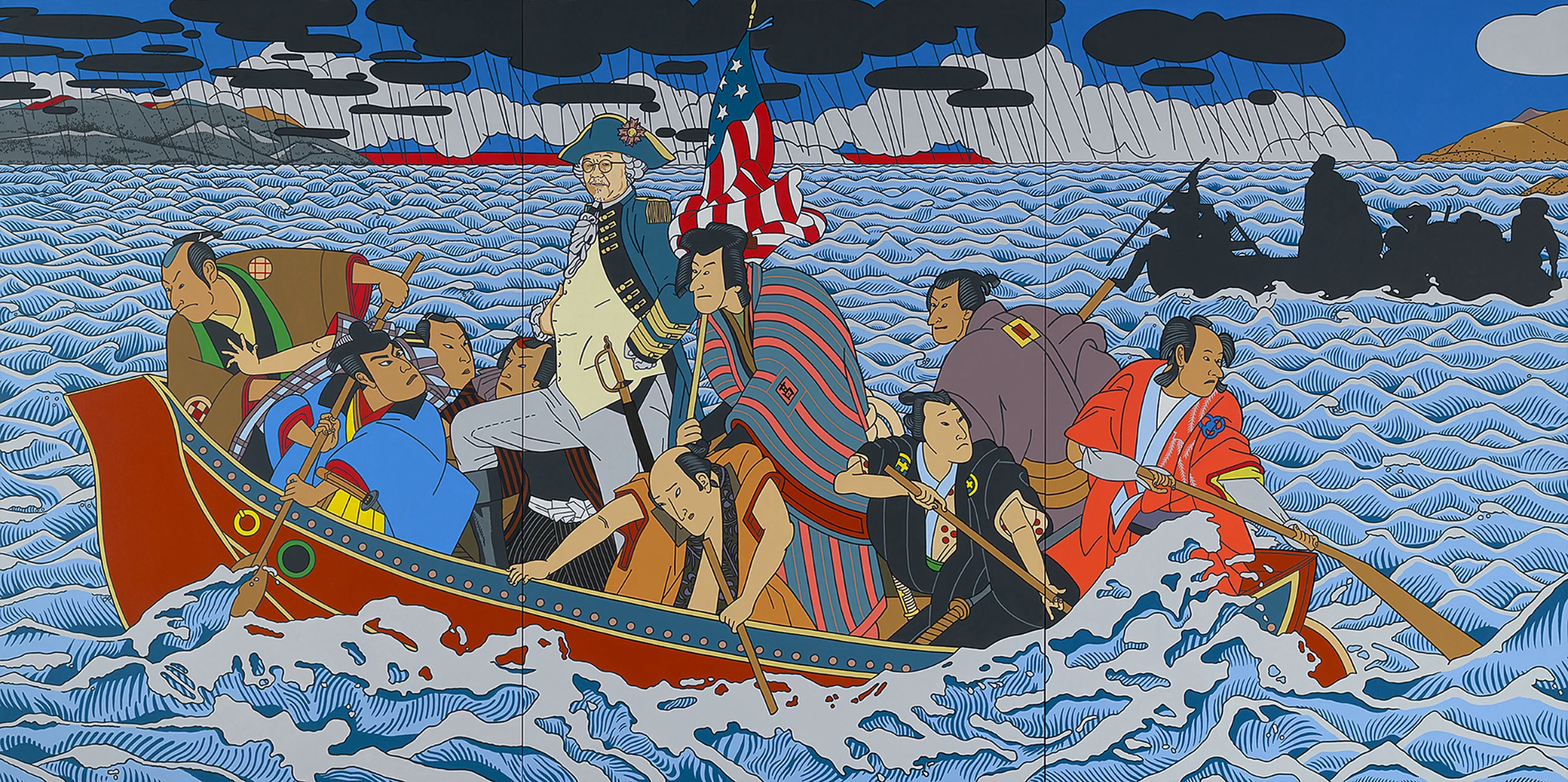
Detail of Roger Shimomura’s Shimomura Crossing the Delaware.
Roger Shimomura, Shimomura Crossing the Delaware