What were Andrew Jackson's motivations for ratifying the Indian Removal Act?
Gist response
Jackson wanted Native land opened to white settlement and cotton growing, and his own wealth had grown through buying and selling land taken from Native peoples. He also claimed that moving Native people west would protect them from white society. Those economic interests and claims of protection helped him justify removal, while Native communities lost homes and control over their land.
Course aim
All chapter content is shown below. Expand models and evidence when you want the complete reference view.
How did promises of protection and progress help make Native land available to other people?
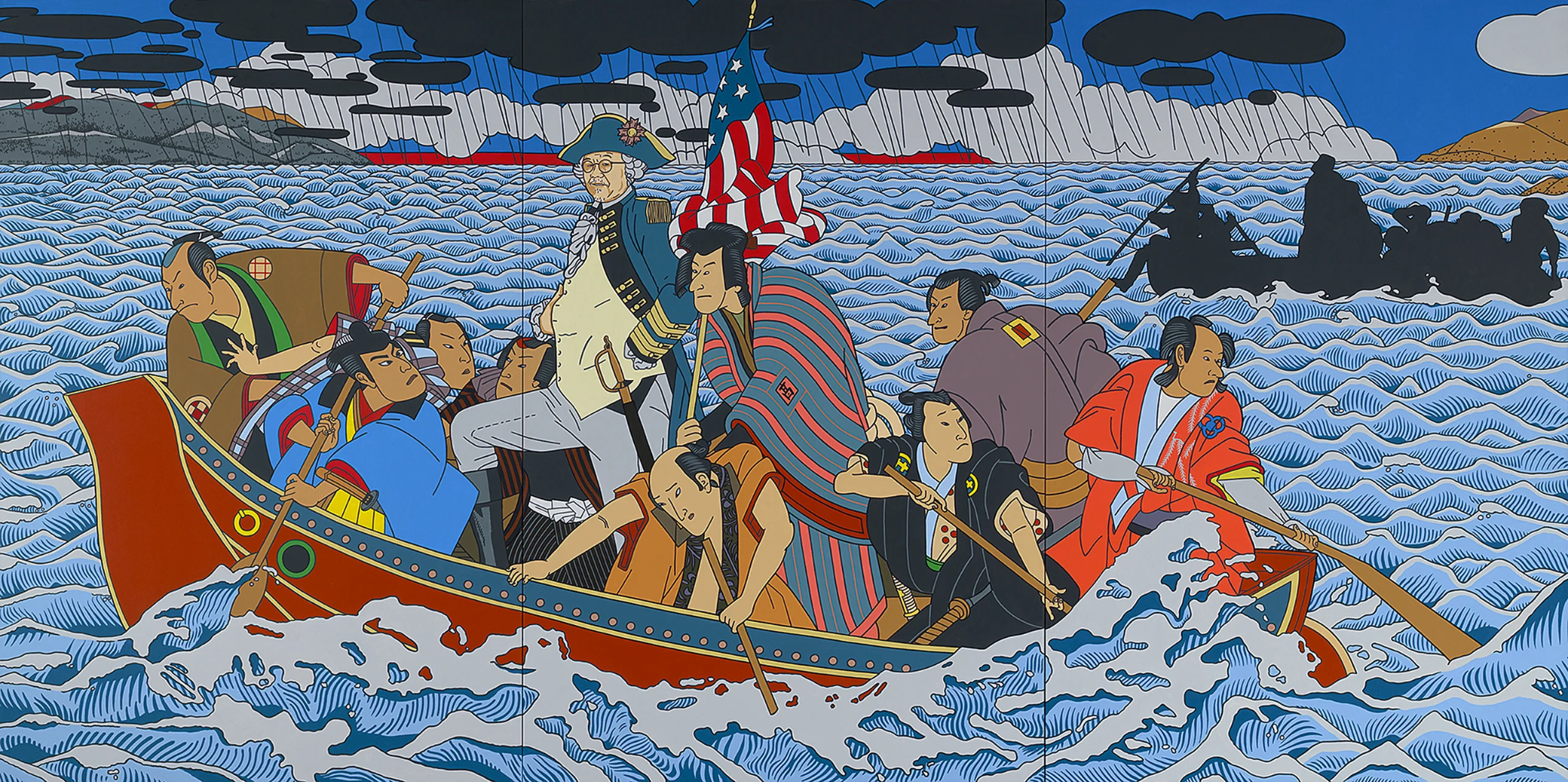
Companion-document work: the supplied chapter does not include Gast’s painting. Use its land, cotton, railroad, and civilization claims as context; analyze the painting’s visible details from the assigned image separately.
Compare the two sides and their overlap. Select one to emphasize it.
Choctaw and Cherokee experiences of forced removal · YPT 69–76, 82–84
What this comparison shows
The Choctaw and Cherokee were separate nations with their own leaders and lands. On the left, officials threatened Choctaw chiefs into signing a removal treaty after many Choctaw had rejected leaving. On the right, a Cherokee minority signed a treaty. Georgia’s militia blocked a newspaper announcement of the meeting to approve it and jailed Chief Ross, helping keep the wider nation from having a say. The overlap shows the shared result: government pressure took land and forced families onto dangerous journeys. A treaty is a formal agreement, but a signature does not prove consent—a freely made choice. The comparison helps us ask who agreed and under what pressure. The treaties were made in different ways, but neither showed a free decision by the whole nation to leave its home.
These were distinct Native nations with different leaders and treaty processes. The overlap identifies repeated government pressures; it does not erase differences within either nation or equate their experiences in every detail.
Think it throughWhat changes when a treaty signature is examined alongside the conditions under which it was obtained?+
A signature alone can hide coercion or missing consent. Choctaw chiefs faced threats after many people rejected removal; the Cherokee agreement was approved without representative participation after militia interference. Calling those agreements legal did not make removal freely chosen (YPT 72, 75).
02 / Connect
Follow land, power, and displacement
Follow the whole sequence. Open evidence beside a step.
Pressure on Native governments opened land to white settlement.
Jackson’s own land speculation linked his wealth to former Native land. As president, he supported states that wanted Native territory, including land Native communities already farmed. YPT 67–69 ↗
01Land is desiredSettlers and officials seek Native territory.
Evidence for this step
Step 1 / Land is desired
Mississippi and Georgia wanted whites to settle land held and farmed by Native nations. Jackson supported their efforts despite existing federal treaties.
02Self-government is attackedStates try to replace Native authority.
Evidence for this step
Step 2 / Self-government is attacked
States sought to end tribal authority and subject Native people to state law. The chapter describes Jackson refusing to uphold the Supreme Court’s restriction on state power.
03Consent is underminedThreats or manipulated approval produce treaties.
Evidence for this step
Step 3 / Consent is undermined
Choctaw chiefs signed under threats; the Cherokee removal agreement proceeded after interference that prevented representative approval. These were distinct routes to the appearance of agreement.
04Removal clears landForced movement supports settlement and cotton.
Evidence for this step
Step 4 / Removal clears land
Families were displaced westward, with severe suffering and deaths. The chapter connects Native removal to the expansion of the South’s cotton-growing region.
This chain identifies choices by governments and settlers, not an inevitable outcome of cotton farming. Native people resisted through refusals, treaty claims, and other actions; their choices were constrained by force.
Railroad expansion added pressure to Pawnee land and food supplies.
Pawnee people farmed and hunted buffalo. Trade and disease had already changed their lives before expanding railroads added new pressures. YPT 76–77 ↗
01Companies plan expansionWestern settlement promises more business.
Evidence for this step
Step 1 / Companies plan expansion
Railroad corporations planned settlement and the growth of their businesses, treating Native lands as obstacles to their routes.
Trains brought white hunters onto the Plains. Native observers saw buffalo carcasses rotting beside tracks, threatening an animal central to their lives.
04Multiple threats convergePawnee families face pressure to leave.
Evidence for this step
Step 4 / Multiple threats converge
White settlers demanded Pawnee land. Sioux attacks, themselves occurring amid settlement and buffalo decline, further threatened food and safety; many Pawnee sought a reservation for protection.
Railroads were one force among disease, settlement, buffalo destruction, and intertribal conflict. The chapter’s account of federal policy should not be read as saying Native nations or their identities simply ceased to exist.
Think it throughHow did economic goals become a threat to Native self-government rather than just a demand for land?+
Keeping treaty rights and independent authority gave Native nations grounds to resist land loss. States and railroad companies therefore sought policies that weakened that authority or eased access to Native territory. Those political choices advanced settlement and business at Native peoples’ expense (YPT 69–72, 79–80).
03 / Question
Test protection and progress
Read a claim. Recall evidence that supports, challenges, or complicates it. Then reveal the evidence.
Chapter claims, evidence, and analysis
Official claim or assumption
Evidence that challenges it
Why it Matters
01
Jackson claimed he could not stop states from violating Native treaty rights.
“Authority over the Indians lay with the federal government, not the states, and in 1832 the US Supreme Court ruled that states had no power to make laws that affected Indian territories” (YPT 69).
The chapter locates authority in the federal government and describes Jackson refusing to uphold the Supreme Court’s ruling against state power in Native territories.
“The government did not treat the farming Choctaw in the same way it treated white planters, however. Farming Choctaw suffered the same fate as the rest of their people” (YPT 71).
The Choctaw were already farmers, and some adopted livestock and cotton production. These changes did not protect them from removal or from losing individual land grants.
“They watched the railroad carry white hunters to the Plains, turning the prairies into buffalo killing fields” (YPT 79).
Railroad access helped bring buffalo hunters, and settlers pressed to remove Pawnee people from desired land. Pawnee testimony described imposed cultural change as destruction.
The claims describe official language, expectations, or arguments in the chapter; they are not the guide’s judgment about Native peoples. The final column interprets documented material and political benefits.
Think it throughWhy is it useful to read a claim of progress alongside testimony from the people who were displaced?+
The testimony changes the measure of progress. A railroad or new cotton land could benefit a company or settler while destroying someone else’s food sources, home, or governing authority. The chapter lets readers assess both gains and costs (YPT 71, 74, 79–81).
04 / Aim
Evidence and context for your aim
Jackson’s interests and stated justification
Land and political support
Jackson profits from buying and reselling former Chickasaw land.
What were Andrew Jackson's motivations for ratifying the Indian Removal Act?
Connect Jackson’s land speculation, military reputation, support for white settlement, cotton expansion, and paternal claims. These pages explain removal motivations; they do not provide a detailed legislative account of the Act.
The supplied pages support removal policy, Jackson’s stated beliefs, and economic interests. They do not provide a detailed legislative or signing account of the Indian Removal Act; retain that distinction when answering the aim.
One possible quote
Jackson spoke of himself as a good father, wanting only the best for his “red children.”
What it can show Use Jackson’s paternal self-presentation as a stated justification, then compare it with land speculation, settlement policy, and the material consequences of removal.
Facts & context
Before becoming president, Jackson profited by buying and reselling land that had belonged to the Chickasaw after negotiating a treaty.
People make choices to get land, money, and the things they need. Those choices can change other people’s lives.
Check your understanding
Academic definition
Economic interests shape historical change when people use power to control resources, organize labor, and distribute wealth. Explain the decisions connecting an economic goal to its consequences.
Check your understanding
Elaboration
Land could generate wealth through speculation, cotton farming, and railroad expansion. The chapter shows people pursuing those gains through treaties, state power, and corporate lobbying. Economic interests became forces of removal because governments and businesses acted to reduce Native control over valuable territory and routes.
Jackson profited by buying and reselling former Chickasaw land; the chapter later connects removal to the expansion of the cotton-growing South.
Try the connectionWhich step turned a desire for profit into a policy that affected another people’s land?
Check your connection
Land could generate wealth through speculation, cotton farming, and railroad expansion. The chapter shows people pursuing those gains through treaties, state power, and corporate lobbying. Economic interests became forces of removal because governments and businesses acted to reduce Native control over valuable territory and routes.
Use a detail from the cited reading to explain this relationship in your own words.
People made the rules about race. Those rules decide who gets treated as belonging and who gets treated unfairly. People can change the rules.
Check your understanding
Academic definition
Racial categories and hierarchies are created and enforced through social beliefs, laws, and institutions. Their meanings change across time and place, while their effects on rights and opportunities are real.
Check your understanding
Elaboration
Native people’s treatment did not depend simply on whether they farmed or adopted practices whites praised. Governments continued to assign them a subordinate position and undermine their collective authority. The contrast between farming practices and unequal legal treatment reveals a racial boundary maintained through policy and power.
Choctaw people practiced agriculture and some grew cotton, yet farming did not bring them the treatment or security given to white planters.
Try the connectionHow does the treatment of Choctaw farmers challenge the claim that farming alone determined who deserved land?
Check your connection
Native people’s treatment did not depend simply on whether they farmed or adopted practices whites praised. Governments continued to assign them a subordinate position and undermine their collective authority. The contrast between farming practices and unequal legal treatment reveals a racial boundary maintained through policy and power.
Use a detail from the cited reading to explain this relationship in your own words.
A story or belief can help people get others to accept unfair treatment—or work together to change it.
Check your understanding
Academic definition
Ideas influence struggles over power by legitimizingdomination, defining belonging, or mobilizing resistance. To explain the connection, identify the idea, who uses it, and the action it helps justify or organize.
Check your understanding
Elaboration
Paternal language and claims of civilization made dispossession sound protective or progressive. The chapter pairs those justifications with coercion and loss, then includes Native testimony that contests them. This makes interpretation itself part of the struggle: whose definition of protection or progress should explain what happened?
Jackson described himself as a caring father while directing removal from Native homes.
Chief Harkins explained that Choctaw departure was a choice between imposed evils; Pawnee testimony challenged the claim that forced cultural change was beneficial.
Try the connectionWhat does Native testimony reveal that a government’s promise of protection leaves out?
Check your connection
Paternal language and claims of civilization made dispossession sound protective or progressive. The chapter pairs those justifications with coercion and loss, then includes Native testimony that contests them. This makes interpretation itself part of the struggle: whose definition of protection or progress should explain what happened?
Use a detail from the cited reading to explain this relationship in your own words.
06 / 4 Question Method
Choctaw removal and the meaning of consent
How to use this organizer
Examine the pressure behind the Treaty of Dancing Rabbit Creek and the forced choices facing Choctaw people.
01Description (Narration)
What happened?
Name the people, actions, and events.
See a model
Federal officials obtained Choctaw chiefs’ signatures on a land-cession treaty, and thousands of Choctaw later traveled west across the Mississippi.
The treaty transferred more than ten million acres to the federal government.
Jackson described removal as protection for Native peoples, but his policy also opened their land to white settlement and the expansion of the cotton economy.
Railroad corporations wanted routes across Native territory, so they pressed the government for access and policies that would support settlement and expand their businesses.
The chapter provides useful context for interpreting American Progress because it connects westward expansion with economic interests and competing judgments about the meaning of civilization.
If we compare claims of progress with Native accounts of displacement, we can ask whose interests a celebration of westward expansion brings into view.
When state governments undermined Native authority, they weakened the power of communities to defend treaty rights and made pressure for removal more difficult to resist.
Despite their farming and participation in the cotton economy, Choctaw people faced removal, showing that adopting practices associated with white society did not secure equal treatment.
Although the Cherokee treaty was officially declared legal, militia interference and the absence of representative participation undermined the claim that the nation had consented.
Railroads expanded transportation and corporate business. However, they also brought hunters onto the Plains, threatening buffalo that were central to Native communities’ food and ways of life.
The bold noun phrase renames the noun beside it, adding historical context inside a complete sentence.
Political leaders
Andrew Jackson, a land speculator who later became president, profited from former Chickasaw land before directing policies that removed Native communities for white settlement.
John Ross, the Cherokee Nation’s principal chief, insisted that the federal government honor treaties protecting Cherokee territory and self-government rather than force his people west.
The Choctaw, a Native nation with a long farming tradition, lost political authority and land even after many members adopted livestock raising and commercial cotton production.
The Pawnee, a Plains people who farmed corn and hunted buffalo, faced growing pressure from railroads, white settlement, disease, and conflict over dwindling resources.
Railroad corporations, businesses seeking western routes and expanding markets, lobbied for access to Native land and policies that favored their commercial plans.
Overtakes the Enemy, a Pawnee speaker who challenged imposed cultural change, explained that replacing Native languages, names, and customs could destroy the people officials claimed to help.
Each word appears in this chapter. Its part of speech describes its job in the model sentence. The -ion groups include related -ation forms. Suffixes give useful clues; check how the word is used.
-ment
noun
an action, process, or result
paymentnoun
A promised payment for Cherokee land did not prove meaningful consent, because militia interference prevented representative participation in the meeting called to approve the treaty.
pay + -ment → payment
Root & originpac — make peace or settle Pay came through French payer from Latin pacare, to pacify or settle. Paying a debt settles what is owed.
The militia prevented publication of the treaty meeting’s announcement and jailed John Ross, limiting Cherokee participation before officials called the agreement legal.
announce + -ment → announcement
Root & originnounce / nunci — report Announce comes from Latin annuntiare, to report or proclaim, related to nuntius, a messenger.
Jackson presented removal as protection, yet forced journeys exposed Native families to severe suffering while their former lands became available for white settlement.
protect + -ion → protection
Root & origintect — cover Protect comes from Latin protegere, meaning to cover in front or shield, from tegere, to cover, and its related form tectus.
Railroad corporations deliberately planned western settlement and sought government support, showing that expansion reflected business decisions rather than an automatic or inevitable march of progress.
deliberate + -ly → deliberately
Root & originlibr — balance or weigh Deliberate traces to Latin deliberare, to consider carefully, often explained through librare, to weigh. It describes weighing a decision before acting.
The Choctaw left their ancestral land unwillingly, choosing departure under pressure rather than accepting laws that denied them an effective voice in their own future.
unwilling + -ly → unwillingly
Root & originwill — wish or intention Will is related to Old English willa, meaning a wish or intention. Willing describes readiness to act; un- reverses it.
Jesse Bushyhead worked as an interpreter between Native people and government officials, yet his family still experienced the suffering and losses of forced Cherokee removal.
interpret + -er → interpreter
Root & origininterpret — explain Interpret comes from Latin interpretari, meaning to explain or translate, related to interpres, an interpreter or go-between.
Carrie Bushyhead, a survivor of the Trail of Tears, later taught Cherokee children, showing how displaced people continued rebuilding community life after profound loss.
survive + -or → survivor
Root & originviv — live Survive comes through French from Latin supervivere, to live beyond, with vivere, meaning to live.
State efforts to destroy tribal authority weakened Native self-government and helped officials pressure communities to leave lands that federal treaties had promised to protect.
tribe + -al → tribal
Root & origintrib — group or division Tribe comes from Latin tribus, a division of the Roman people. Tribal adds -al to mean relating to a tribe.
The national government had made treaties protecting Native lands, but Jackson supported state pressure and refused to enforce the court’s restriction on state authority.
nation + -al → national
Root & originnat — born Nat comes from Latin nasci, meaning to be born, and natus, meaning born. Nation, native, and nature developed from this family.
Every one of these questions will be on the reading quiz.
Complete the explanation.
Jackson’s removal policy joined white settlement ambitions with claims of protection. His earlier land speculation reveals an economic . State demands challenged treaty guarantees of Native . Removal opened territory to cotton expansion, while contested consent and military force reduced Native . The consequences expose the gap between a promise of care and the reality of .