How were Irish immigrants both punished and privileged by the U.S. racial hierarchy, and what role did economics play in shaping Irish identity?
Gist response
Irish immigrants faced anti-Catholic prejudice and dangerous, poorly paid work, but being legally considered white gave them opportunities to become citizens and, for men, vote. Irish voters and community networks helped one another gain jobs and political influence. Competition for work also led many Irish immigrants to turn against Black workers, using their status as white people to seek acceptance and advantages in American society.
Takaki links competition over jobs to claims of racial membership. The advantage was relational: it could improve Irish workers’ position by excluding Black workers.
Why could shared poverty produce exclusion rather than solidarity?
Access to citizenship
“What greatly enabled the Irish to "merge" into the mainstream was the fact that they were "white" and hence eligible for naturalized citizenship.”
Whiteness supplied legal opportunities despite anti-Irish hostility. Citizenship and voting gave Irish communities tools unavailable to groups barred from naturalization or voting.
How can a group experience discrimination and still possess a consequential privilege?
Protecting better jobs through exclusion
“Irish workers campaigned to make American labor equal "white" labor.”
After gaining influence in skilled work and unions, Irish workers could use racial exclusion to protect advantages. Their changing position shows identity and opportunity interacting over time.
Who paid the cost when occupational gains were defended through racial exclusion?
Connect a Key Idea
Race is socially constructed
Irish immigrants could be stigmatized as outsiders while legally recognized as white. The consequences of those categories depended on citizenship rules, politics, and employment practices.
Start with the gist, then make it more precise using a detail, a relationship, or a qualification from the reading.
Build the next sentence
Although Irish immigrants faced ___, their eligibility for ___ allowed ___.
Competition over ___ encouraged some Irish workers to ___, which disadvantaged ___.
Add context with an appositive
Frederick Douglass, a Black abolitionist who criticized Irish immigrants’ anti-Black hostility, … OPT 142
Tammany Hall, a New York Democratic political organization that cultivated Irish voting power, … OPT 153
Push your thinking
Why does discrimination against Irish immigrants not make their legal position identical to that of Black or Chinese people?
Where does the chapter show possible solidarity, and where does it show exclusion?
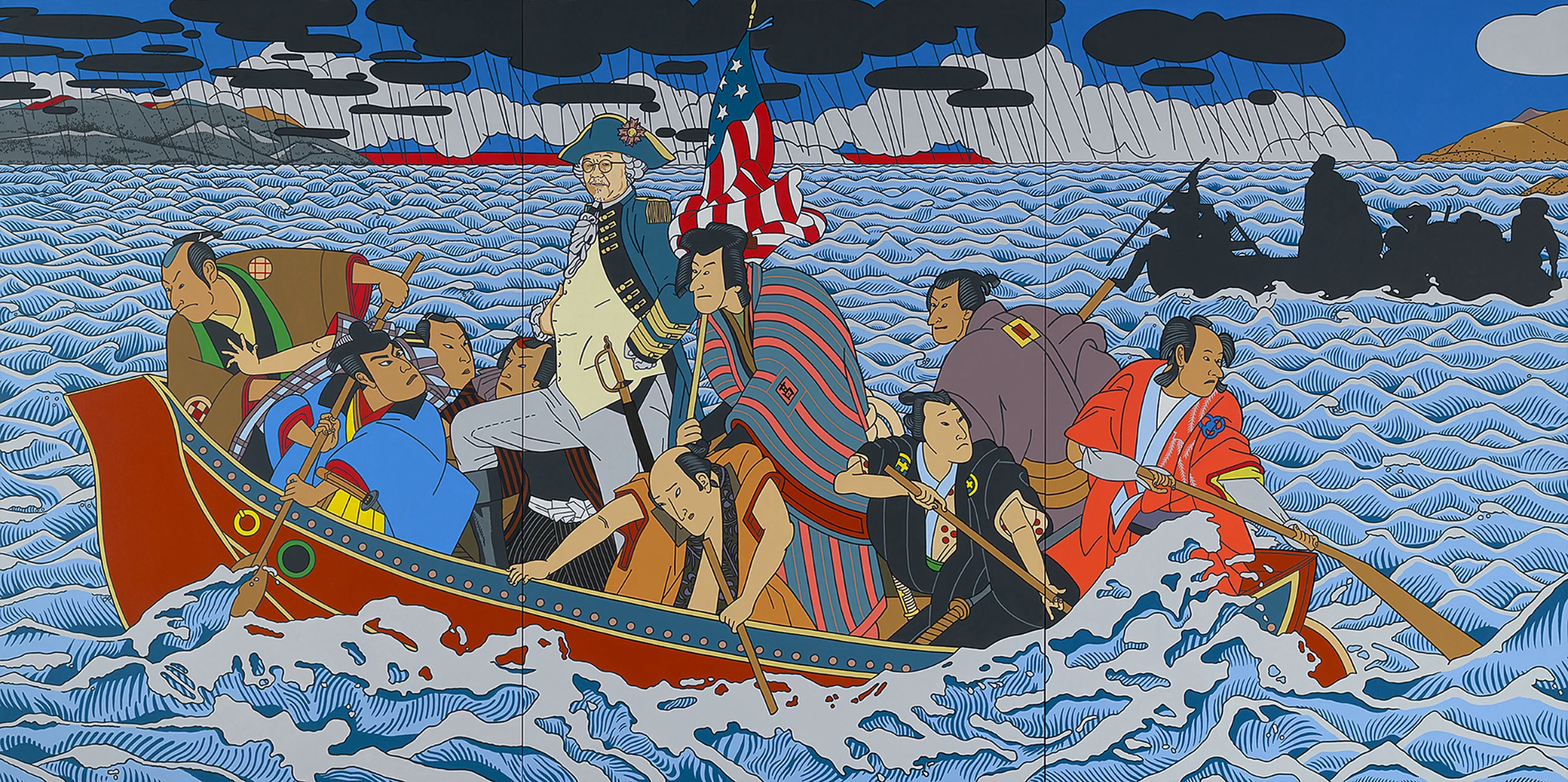
Roger Shimomura, Shimomura Crossing the DelawareHow did push and pull factors shape the migration stories of Irish, Mexican, and Chinese immigrants?
Changing agriculture, famine, and migration expectationsOPT 133–137
Profits and displacement
“The conversion of land from tillage to grazing meant that 90 percent of the laborers previously needed for planting and harvesting had become superfluous.”
Landlords’ shift toward profitable cattle production reduced the demand for agricultural labor. Emigration grew from changes in land use and ownership as well as personal ambition.
How could a profitable export economy leave local people with fewer ways to survive?
Famine amid exports
“During the famine years, Ireland continued to export grain and cattle to British markets.”
The potato blight was devastating, but access to food and the organization of trade also mattered. The sentence helps separate crop failure from the social decisions shaping hunger.
What does continued food export reveal about who controlled resources during the famine?
Letters describe opportunities
“Letters from friends and family in the United States glowingly described riches "growing like grass" and the boundlessness of a country where there was no tyranny or oppression from landlords.”
Migration networks spread expectations of work and independence. These letters describe a pull factor; they do not prove that every immigrant found those opportunities.
How could a letter affect a migration decision even if its picture of America was incomplete?
Why did America keep demanding people’s labor while rejecting the people themselves?
Whiteness supplied legal opportunities despite anti-Irish hostility. Citizenship and voting gave Irish communities tools unavailable to groups barred from naturalization or voting.
How can a group experience discrimination and still possess a consequential privilege?